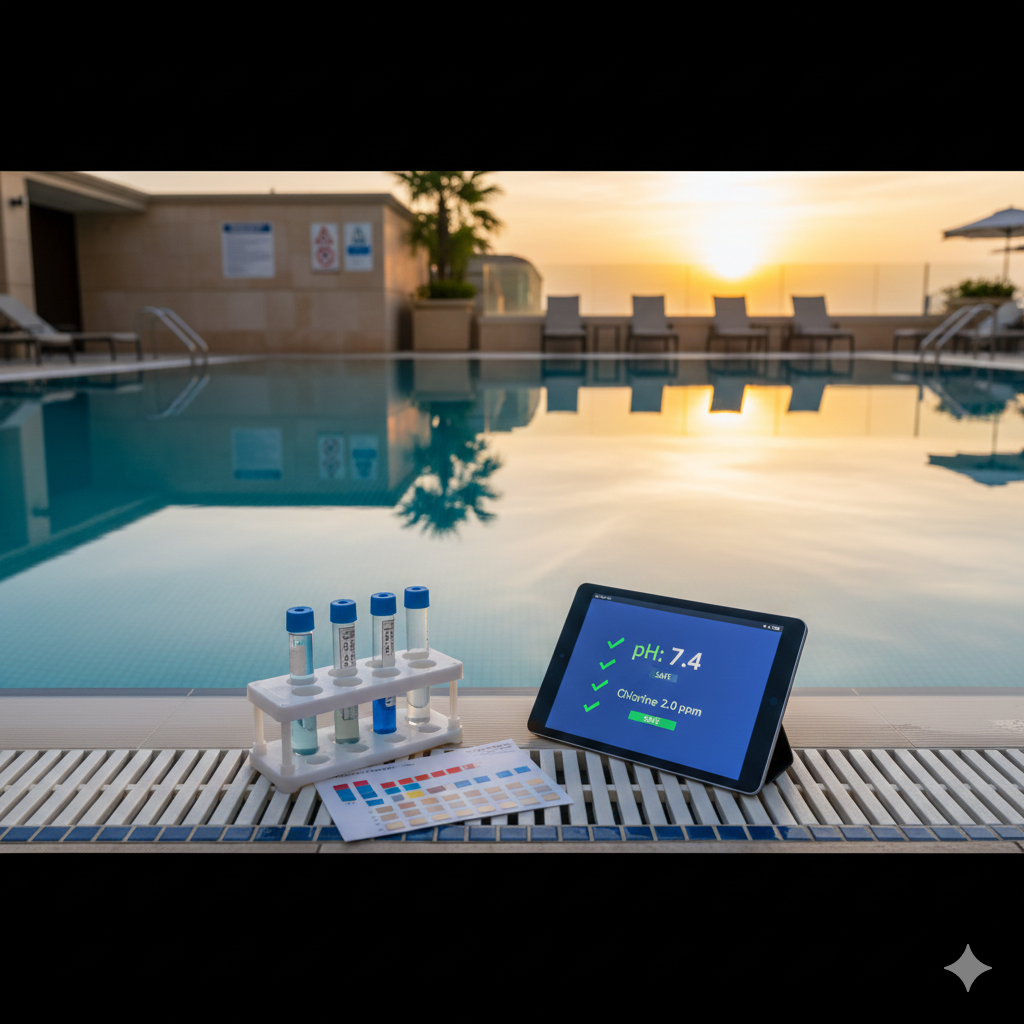
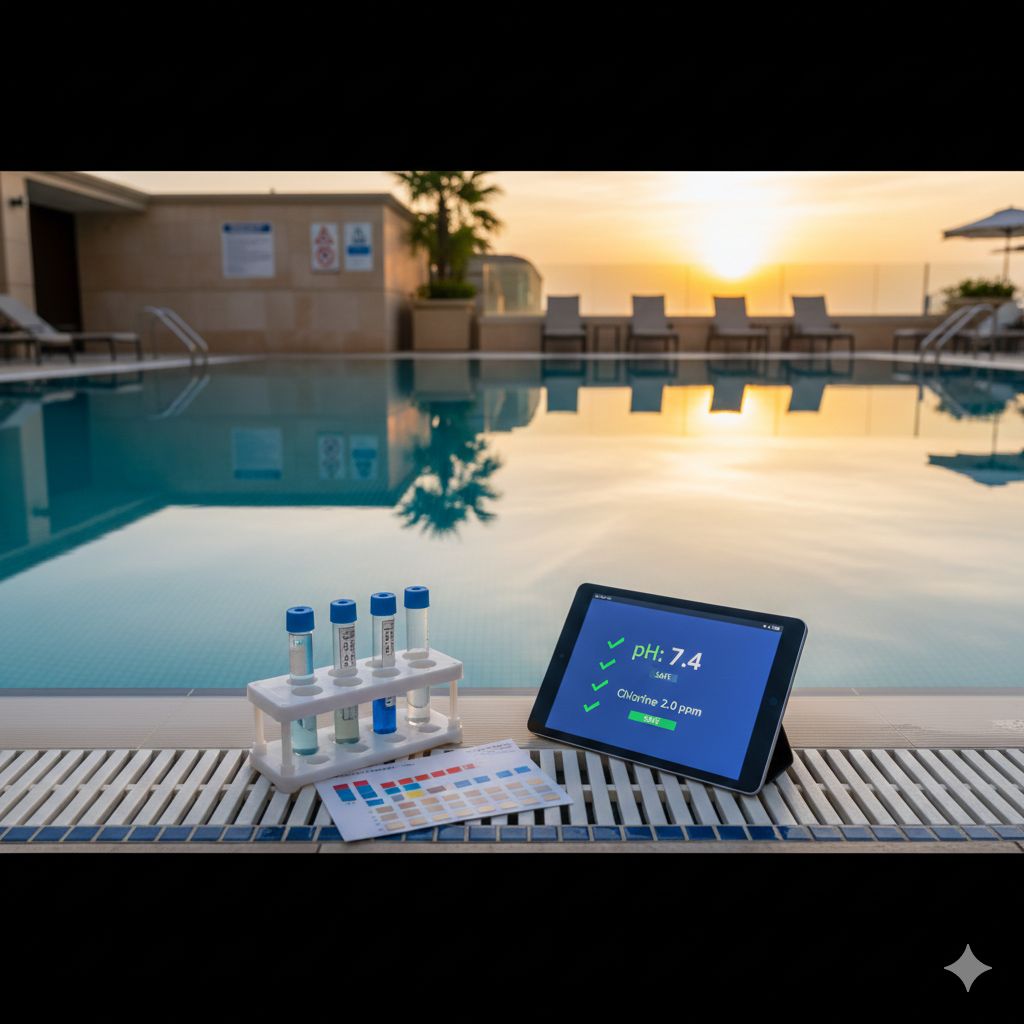
The guest develops a rash after using the hot tub. Another reports eye irritation from the pool. A child ends up in the emergency room with symptoms consistent with recreational water illness.
Your chemical logs become the first documents reviewed.
Pool and spa compliance represents one of the highest-liability areas of hotel operations. Waterborne illness outbreaks traced to hotel aquatic facilities result in lawsuits, regulatory action, and reputation damage that can take years to recover from. Yet many properties treat chemical testing as a checkbox exercise rather than a genuine safety program.
The Regulatory Framework
Pool and spa operations fall under multiple regulatory requirements:
CDC Model Aquatic Health Code (MAHC)
The Centers for Disease Control and Prevention publishes the Model Aquatic Health Code (MAHC), which provides comprehensive guidance for pool and spa operations. While not directly enforceable, MAHC serves as the basis for many state and local codes and represents best practice standards.
Key MAHC guidelines:
- Water quality parameters and testing frequency
- Safety equipment requirements
- Design and construction standards
- Operator certification requirements
- Incident response procedures
State and Local Health Codes
Enforcement happens at the state and local level:
- Swimming Facility Codes administered by health departments
- Annual inspections and permits required
- Specific chemical parameters mandated
- Record-keeping requirements defined
- Penalties for violations established
Requirements vary significantly by jurisdiction. Illinois requires annual inspections of all 3,500 swimming facilities statewide. Other states may have different frequencies or standards.
Federal Requirements
Americans with Disabilities Act (ADA)
- Pool lift requirements for accessibility
- Entry/exit requirements
- Exceptions for certain facilities
Virginia Graeme Baker Pool and Spa Safety Act (VGB)
- Drain cover requirements
- Suction entrapment prevention
- Applies to all public pools and spas
Chemical Parameters: What the Numbers Mean
Understanding water chemistry prevents both health hazards and documentation failures:
Free Available Chlorine (FAC)
Free chlorine is the “active” chlorine available to kill pathogens.
| Facility Type | Minimum | Maximum |
|---|---|---|
| Swimming pools | 1.0 ppm | 10.0 ppm |
| Hot tubs/spas | 3.0 ppm | 10.0 ppm |
| Pools with stabilizer (cyanuric acid) | 2.0 ppm | 10.0 ppm |
| Therapy pools | 3.0 ppm | 10.0 ppm |
ppm = parts per million
CDC recommends maintaining at least 1 ppm for pools and at least 3 ppm for hot tubs/spas. When cyanuric acid is used, minimum free chlorine should be at least 2 ppm.
Why It Matters Too low: Pathogens survive; disease transmission risk Too high: Skin/eye irritation; guest complaints
Combined Chlorine (CC)
Combined chlorine represents chlorine that has reacted with contaminants (sweat, urine, skin cells) and formed chloramines—the “pool smell” people associate with chlorine.
Target: As low as possible (typically < 0.5 ppm)
Combined chlorine indicates:
- High bather load relative to treatment capacity
- Need for superchlorination (shock treatment)
- Potential water quality issues
pH Level
pH affects both disinfection effectiveness and bather comfort.
Required Range: 7.2 - 7.8
| pH Level | Impact |
|---|---|
| Below 7.0 | Corrosive to equipment, skin irritation |
| 7.0 - 7.2 | Acceptable but low; may cause irritation |
| 7.2 - 7.6 | Optimal range for most parameters |
| 7.6 - 7.8 | Acceptable but reduced chlorine effectiveness |
| Above 7.8 | Significantly reduced disinfection; scaling |
Critical Relationship: pH affects chlorine effectiveness. At pH 7.2, approximately 65% of chlorine is in the active killing form. At pH 8.0, only about 20% is active.
Total Alkalinity
Alkalinity buffers pH, preventing rapid fluctuations.
Required Range: 60 - 180 ppm
Low alkalinity causes:
- pH instability
- Corrosive conditions
- Equipment damage
High alkalinity causes:
- Difficulty adjusting pH
- Scaling on surfaces and equipment
- Cloudy water
Cyanuric Acid (Stabilizer)
Used in outdoor pools to prevent chlorine degradation from UV light.
Maximum Allowed: 30 - 100 ppm (varies by jurisdiction)
Why Limits Exist: High cyanuric acid reduces chlorine effectiveness, requiring higher chlorine levels to achieve same disinfection.
Pro Tip from the Floor: “We had a pool that kept failing inspections despite showing adequate chlorine levels. The problem was cyanuric acid buildup from years of using stabilized chlorine products. It was over 150 ppm. The only fix was partially draining and refilling. Now we test cyanuric acid monthly.” — Director of Engineering, resort property
Water Temperature
Temperature affects both comfort and safety:
| Facility | Minimum | Maximum |
|---|---|---|
| Swimming pools | 72°F (22°C) | 95°F (35°C) |
| Hot tubs/spas | 98°F (37°C) | 104°F (40°C) |
Hot Tub Warning: Temperatures above 104°F (40°C) pose health risks, especially for pregnant women, elderly, and those with heart conditions.
Testing Frequency Requirements
Chemical testing isn’t optional—it’s mandated:
Minimum Testing Schedule
| Facility Type | When | Parameters |
|---|---|---|
| Pools - in use | Before opening and every 4 hours | FAC, pH |
| Pools - not in use | Daily | FAC, pH |
| Hot tubs - in use | Before opening and every 2 hours | FAC, pH |
| Hot tubs - not in use | Daily | FAC, pH |
| All facilities | Weekly | Alkalinity, cyanuric acid |
| All facilities | As needed | Combined chlorine, total dissolved solids |
Some jurisdictions require more frequent testing. Always verify local requirements.
When to Test More Frequently
- After heavy bather load
- Following rain or severe weather (outdoor pools)
- After chemical adjustments
- When complaints are received
- After any operational issues
Continuous Monitoring
Modern facilities increasingly use automated monitoring:
- ORP (Oxidation-Reduction Potential) sensors
- pH probes
- Continuous chlorine analyzers
- Remote monitoring and alerting
Automation supplements but doesn’t replace manual testing and documentation.
Documentation Standards
Your chemical logs serve multiple purposes: regulatory compliance, liability protection, and operational management.
What to Document
Every test entry should include:
- Date and time of test
- Name/initials of person testing
- Test results for each parameter
- Action taken if out of range
- Follow-up test results after adjustment
Log Format Requirements
Most jurisdictions require:
- Legible entries (printed or electronic)
- Ink for paper logs (no pencil)
- No alterations without notation (corrections signed and dated)
- Retention period (typically 3-5 years, some longer)
- On-site availability during operating hours
The Paper Log Problem
Paper chemical logs suffer from the same issues as other paper documentation:
- Retroactive completion (all entries at end of shift)
- Falsified readings to avoid corrective action
- Lost or damaged records
- Illegible handwriting
- No verification of actual testing
When illness outbreaks are investigated, paper logs with suspiciously consistent readings attract regulatory scrutiny.
Digital Documentation Benefits
Electronic logging systems provide:
- Timestamps that prove when tests occurred
- Photo evidence of test results
- GPS confirmation of testing location
- Automatic out-of-range alerts
- Trend analysis for equipment issues
- Defensible records for litigation
Pro Tip from the Floor: “After a guest illness complaint, the health department pulled our paper logs for the past two weeks. They noticed every reading was identical—2.0 ppm chlorine, pH 7.4—across 56 entries. The inspector said that level of consistency in an active pool is statistically impossible. We got cited for inadequate documentation and started digital logging the next week.” — Aquatics Director, beachfront resort
Liability Exposure in Pool/Spa Operations
Aquatic facilities create significant liability:
Waterborne Illness Outbreaks
Common pathogens in improperly maintained pools:
Cryptosporidium
- Chlorine-resistant parasite
- Causes severe gastrointestinal illness
- Can survive for days even in properly chlorinated water
- Requires hyperchlorination to eliminate
Legionella
- Bacteria thriving in warm water
- Causes Legionnaires’ disease (severe pneumonia)
- Hot tubs and decorative fountains are high-risk
- Temperature and disinfection control required
Pseudomonas
- Causes “hot tub rash” (folliculitis)
- Thrives in warm, inadequately treated water
- Common complaint from hotel guests
Injury Claims
Beyond illness:
- Slip and fall on wet surfaces
- Diving injuries
- Entrapment incidents (VGB violations)
- Drowning and near-drowning
- Chemical burns (overdosing)
Documentation as Defense
In litigation following pool-related injury or illness:
What Plaintiffs Look For
- Gaps in testing records
- Out-of-range results without corrective action
- Patterns suggesting falsification
- Lack of staff training documentation
- Missing maintenance records
- Prior complaints or incidents
What Defense Needs
- Continuous, consistent testing documentation
- Evidence of corrective actions taken
- Staff certification records
- Equipment maintenance logs
- Prior inspection results
- Written policies and procedures
Common Compliance Failures
Health department inspections frequently cite:
Chemical Violations
- FAC below minimum (most common)
- pH outside acceptable range
- Incomplete or missing chemical logs
- Testing not performed at required frequency
- Test kit expired or improperly calibrated
Safety Equipment Violations
- Missing or improper drain covers (VGB compliance)
- Pool lifts not operational (ADA compliance)
- Rescue equipment missing or inaccessible
- Depth markers faded or incorrect
- Safety signage missing or inadequate
Facility Violations
- Pool deck deterioration
- Improper fencing or gates
- Chemical storage non-compliant
- Filtration system issues
- Circulation problems
Documentation Violations
- Logs not maintained for required period
- Staff certification documentation missing
- Maintenance records incomplete
- Operating permits not posted
- Inspection reports not available
Building a Robust Pool/Spa Compliance Program
Systematic approach prevents violations:
Staff Certification
Ensure certified pool operators (CPO) or equivalent:
- At least one certified operator per facility
- Certification current and on file
- Training for all staff who perform testing
- Documentation of training completion
Equipment Investment
Reliable testing equipment essential:
- Commercial-grade test kits (not residential)
- Regular calibration of electronic testers
- Backup equipment available
- Reagent replacement schedule maintained
Testing Protocol
Standardize testing procedures:
- Record time of test before starting
- Collect sample from designated location
- Perform test per equipment instructions
- Record results immediately (not from memory later)
- Compare to required ranges
- Take corrective action if needed
- Retest after adjustment
- Document all actions
Escalation Procedures
Define response to out-of-range readings:
| Parameter | Minor Deviation | Major Deviation | Immediate Action |
|---|---|---|---|
| FAC low | Adjust and retest in 30 min | Close until ≥ minimum | Close immediately |
| FAC high | Allow dissipation, retest | Restrict entry until < 10 ppm | Post warning, restrict |
| pH out of range | Adjust and retest in 30 min | Close until in range | Close immediately |
| Combined chlorine high | Shock treatment scheduled | Shock and close | Close for treatment |
Maintenance Integration
Pool compliance connects to broader maintenance:
- Pump and filtration inspection schedule
- Drain cover inspection and documentation
- Chemical feed system maintenance
- Pool surface condition assessment
- Deck and safety equipment checks
Seasonal and Special Considerations
Seasonal Pools
Properties with seasonal outdoor pools:
- Opening protocols with thorough testing
- Closing procedures properly documented
- Winterization if applicable
- Pre-season inspections required in many jurisdictions
Event Load Planning
High-occupancy events stress water quality:
- Pool parties and special events
- Peak season weekends
- Large group arrivals
- Conference attendees
Plan for:
- Increased testing frequency
- Pre-event superchlorination
- Staff coverage for monitoring
- Potential closure if parameters can’t be maintained
Facility Modifications
Any changes to aquatic facilities may require:
- Construction permits from health department
- New inspections after modification
- Updated operating permits
- Compliance verification
Connecting to Broader Audit Programs
Pool/spa compliance should integrate with property-wide quality systems:
Daily Inspections
Include pool areas in daily property walkthroughs:
- Safety equipment check
- Signage verification
- Deck condition assessment
- General cleanliness
- Chemical storage organization
Incident Integration
Pool incidents feed into property incident documentation:
- Guest complaints documented
- Injuries reported per protocol
- Illness claims investigated
- Corrective actions tracked
Audit Checklist Inclusion
Self-audits should verify:
- Testing frequency compliance
- Documentation completeness
- Staff certification currency
- Equipment condition
- Regulatory posting requirements
Technology Investment for Pool Compliance
Modern pool management technology provides:
Automated Chemical Control
- Continuous monitoring of key parameters
- Automatic chemical feeding adjustments
- Alert notification when ranges exceeded
- Data logging for compliance documentation
Remote Monitoring
- Real-time visibility from any location
- After-hours alerting
- Trend analysis for predictive maintenance
- Portfolio-wide visibility for multi-property operators
Digital Documentation
- Mobile testing with photo evidence
- Automatic timestamp and location capture
- Integration with maintenance systems
- Audit-ready report generation
Pro Tip from the Floor: “We installed automated monitoring on our spa after two guest illness complaints in one month. The system caught a chemical feed pump failure at 2 AM on a Saturday. We got the alert, closed the spa, and had it fixed before morning. On paper logs alone, we wouldn’t have known until Monday’s first test.” — Chief Engineer, boutique hotel
Regulatory Inspection Preparation
When health inspectors arrive:
Have Ready
- Current operating permit (posted)
- Chemical logs (accessible and complete)
- Staff certification documentation
- Equipment maintenance records
- Previous inspection reports
- Written operating procedures
Demonstrate
- Knowledge of testing procedures
- Understanding of required parameters
- Ability to explain corrective action protocols
- Awareness of current regulations
Don’t
- Argue with inspectors
- Make excuses for violations
- Hide or alter documentation
- Claim ignorance of requirements
Creating Your Pool/Spa Compliance Checklist
Build regular verification into operations:
Daily
- FAC and pH tested at required intervals
- All test results documented with times
- Out-of-range results addressed with corrective action
- Pool deck clear of hazards
- Safety equipment present and accessible
- Signage visible and legible
Weekly
- Alkalinity tested and documented
- Cyanuric acid tested (if applicable)
- Test kit reagents checked for expiration
- Equipment condition assessed
- Chemical storage inspected
Monthly
- Staff certification status verified
- Trend analysis of chemical readings
- Drain cover inspection
- Complete facility safety audit
- Maintenance schedule review
Ready to digitize your pool and spa compliance documentation? HAS provides integrated chemical logging with automated alerts, photo verification, and inspection-ready reporting.
Request a demo to see how leading hotels manage aquatic facility compliance.
Related Reading:

About the Author
Orvia Team
Hotel Audit Experts
The Orvia team brings decades of combined experience in hospitality operations, quality assurance, and technology. We're passionate about helping hotels maintain exceptional standards.