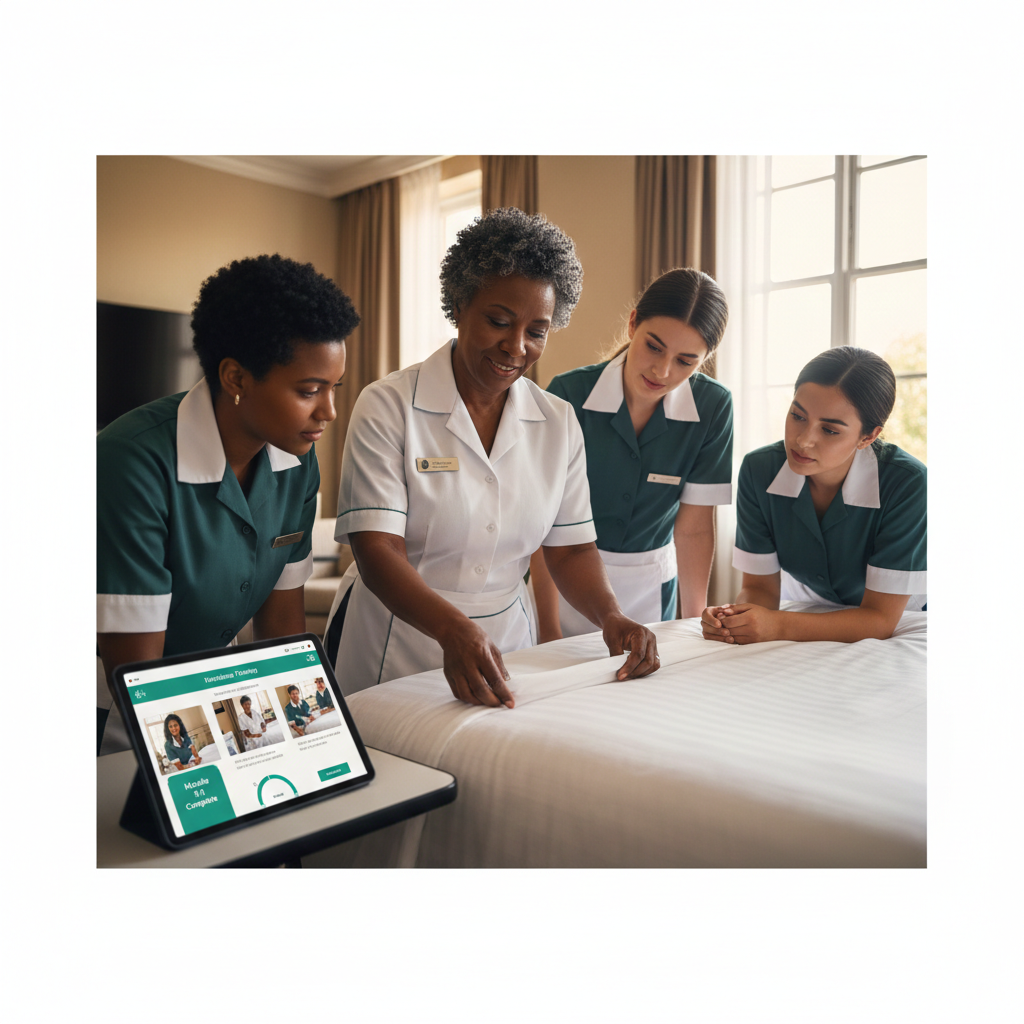
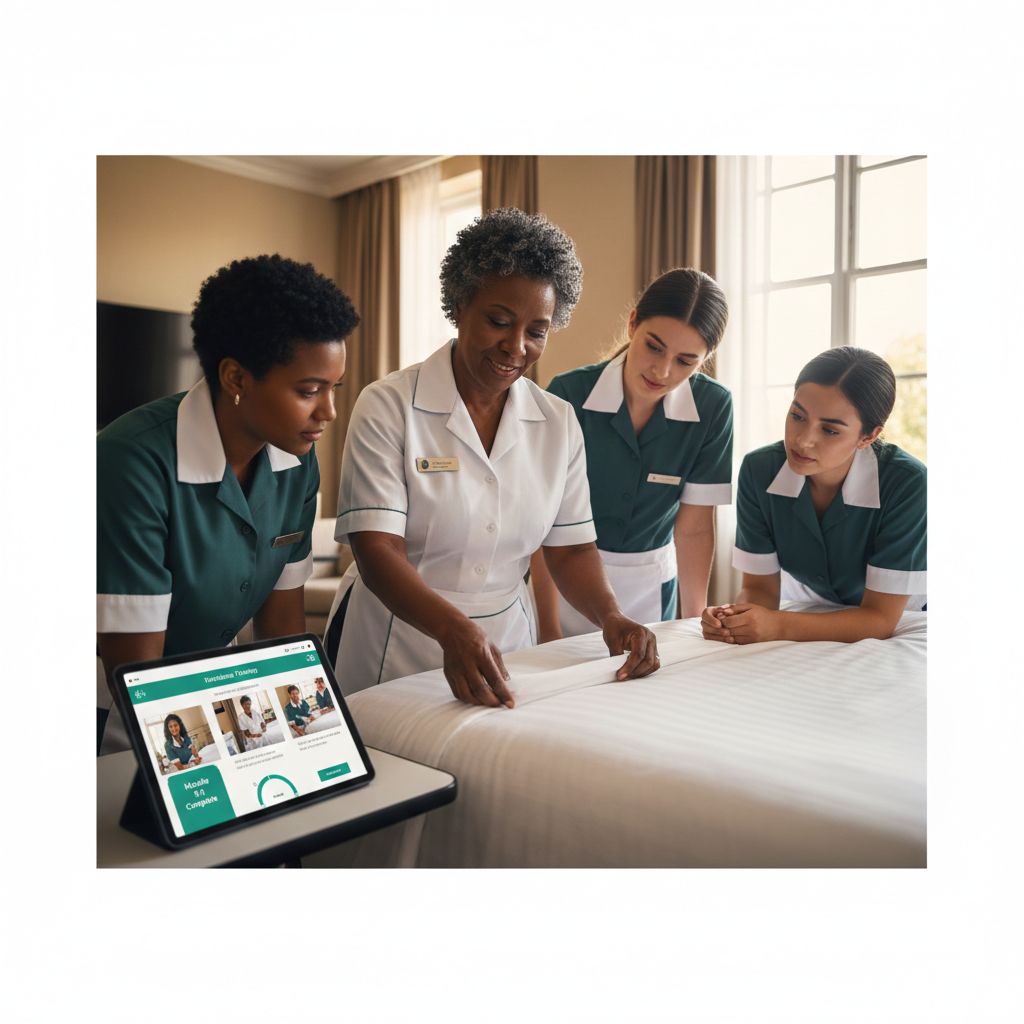
Housekeeping departments are the front line of hotel quality assurance. Guest satisfaction, online review scores, and brand audit results depend heavily on housekeeping performance. Yet many properties struggle with inconsistent room cleaning standards, high housekeeping turnover, and preventable audit failures.
The root cause is not lack of effort—it is lack of systematic training. This comprehensive guide provides Executive Housekeepers, Quality Assurance Managers, and General Managers with a complete framework for building housekeeping training programs that create audit-ready teams and sustainable quality outcomes.
Understanding the Housekeeping Training Challenge
Housekeeping training differs fundamentally from training in other hotel departments. The work is physically demanding, standards are detailed and exacting, language barriers often exist, and staff turnover rates are typically higher than other departments.
Pro Tip from the Floor: “When I became Executive Housekeeper at a 340-room property, our guest satisfaction scores for room cleanliness were 73%—failing by any standard. Our brand audit scores averaged 81%, barely passing. I spent my first month shadow-training with every housekeeper. What I discovered shocked me. We had no standardized training—each new hire was paired with whoever was available that day and learned that person’s individual method. Five housekeepers cleaned rooms five completely different ways. When I implemented structured training with demonstrated competency verification, our scores improved to 89% guest satisfaction and 93% brand audit scores within eight months. Systematic training transformed our operation.” — Executive Housekeeper, full-service hotel
The Cost of Poor Housekeeping Training
Inadequate housekeeping training creates measurable business consequences:
Guest Satisfaction Impact: Room cleanliness is consistently the number one factor driving guest satisfaction scores. Properties with poorly trained housekeeping teams receive lower satisfaction ratings, generating negative online reviews that decrease bookings and revenue.
Brand Audit Failures: Housekeeping deficiencies account for approximately 40-50% of all brand audit failures. Issues like improper bed making, bathroom cleanliness deficiencies, and missed cleaning areas drive audit score reductions.
Revenue Loss: Research shows a half-point decrease in online review scores (from 4.5 to 4.0) correlates with 8-12% reduction in achievable room rates. Poor room quality directly erodes revenue.
Increased Labor Costs: Untrained housekeepers work inefficiently, requiring more labor hours to complete the same work. They also create rework when inspectors find deficiencies requiring room cleaning to be repeated.
Staff Turnover: Employees who receive inadequate training feel frustrated and unsuccessful, leading to higher turnover. The cost of replacing a housekeeper (recruiting, onboarding, training, and productivity ramp) averages $3,000-$5,000 per position.
Liability Exposure: Improperly trained staff may use chemicals incorrectly, creating safety hazards. They may fail to identify maintenance issues that could cause guest injuries. Poor training creates legal liability.
The Foundation: Creating Your Training Infrastructure
Before training individual housekeepers, establish the infrastructure that supports systematic training delivery.
Develop Comprehensive Training Curricula
Create documented training programs covering every aspect of housekeeping operations:
Guest Room Cleaning Module: Step-by-step procedures for cleaning guest rooms including bathroom cleaning sequences, bedroom cleaning procedures, bed making standards, dusting protocols, and vacuuming techniques. This module should include approximately 25-30 hours of training.
Inspection Standards Module: Train staff on what constitutes a “clean” room according to your property and brand standards. This includes visual standards, cleanliness criteria, and quality checkpoints. Allocate 8-10 hours.
Linen Management Module: Proper handling of clean and soiled linens, bed making techniques for different bed types, and linen room organization. Allocate 4-6 hours.
Chemical Safety and Usage Module: Safe handling of cleaning chemicals, proper dilution ratios, appropriate product selection for different surfaces, and OSHA hazard communication standards. This is mandatory safety training requiring 3-4 hours.
Equipment Operation Module: Proper use of vacuum cleaners, carpet extractors, floor machines, and other housekeeping equipment. Include basic troubleshooting and maintenance. Allocate 4-6 hours.
Lost and Found Procedures Module: Protocols for handling items found in guest rooms, documentation requirements, and storage procedures. Allocate 1-2 hours.
Guest Interaction Module: Appropriate responses when encountering guests, privacy protocols, and communication standards. Allocate 2-3 hours.
Safety and Ergonomics Module: Proper lifting techniques, injury prevention, use of personal protective equipment (PPE), and reporting procedures for safety concerns. Allocate 3-4 hours.
Each module should include written procedures, visual guides (photos or videos), hands-on practice, and competency verification.
Create Visual Training Materials
Housekeeping staff often include team members for whom English is a second language. Visual training materials bridge language barriers and improve comprehension.
Photo Libraries: Create comprehensive photo libraries showing correct execution of standards. Examples include:
- Properly made bed with correct pillow arrangement
- Bathroom with properly folded towels and arranged amenities
- Correctly cleaned bathroom fixtures showing proper shine
- Properly stocked housekeeping cart organized for efficiency
- Correct chemical dilution using measured ratios
Video Demonstrations: Record video demonstrations of key procedures. Videos showing bed making sequences, bathroom cleaning order, and dusting techniques allow trainees to observe correct methods repeatedly. Videos should be 2-5 minutes each, focused on single procedures.
Illustrated Checklists: Create checklists with small photos or icons next to each item. This reinforces what “completed” looks like for each task.
Laminated Quick-Reference Cards: Develop pocket-sized laminated cards showing chemical dilution ratios, cleaning product selection guides, and daily procedure checklists. Housekeepers can reference these during work.
Multi-Language Materials: If your staff speaks multiple languages, create training materials in those languages. At minimum, create materials in English and Spanish, the two most common languages in US hospitality.
Pro Tip from the Floor: “We invested $4,000 in creating professional video training modules showing every housekeeping procedure from bed making to bathroom cleaning. Each video is narrated in both English and Spanish. New hires watch these videos, practice the procedures under supervision, and then watch the videos again to self-correct. This investment paid for itself in the first year through reduced training time and fewer quality deficiencies. Now, every housekeeper learns the exact same way, ensuring consistency.” — Director of Housekeeping, 280-room property
Designate and Train Housekeeping Trainers
Do not assume any experienced housekeeper can train effectively. Teaching is a distinct skill requiring its own training.
Trainer Selection: Identify housekeepers who demonstrate:
- Consistent high-quality performance on room inspections
- Strong communication skills
- Patience and positive attitude
- Ability to demonstrate procedures clearly
- Willingness to provide constructive feedback
Train the Trainer Program: Provide selected trainers with specialized training covering:
- Adult learning principles
- How to demonstrate procedures effectively
- Providing constructive feedback
- Recognizing and correcting common mistakes
- Cultural sensitivity and communication across language barriers
- How to verify competency rather than just completion
Trainer Compensation: Compensate designated trainers appropriately. Consider hourly pay increases ($1-2/hour premium), bonus compensation per trained employee, or other recognition. Training is additional responsibility requiring additional compensation.
Ongoing Trainer Development: Provide regular coaching to trainers. Observe training sessions periodically and provide feedback on training effectiveness. Refresh trainer skills annually.
The Comprehensive New Hire Training Program
Systematic onboarding ensures every new housekeeper receives identical foundational training regardless of who conducts the training or when they are hired.
Week 1: Orientation and Fundamentals (40 hours)
Day 1: General Orientation (8 hours)
- Welcome and property tour
- HR paperwork completion
- Safety orientation including emergency procedures and evacuation routes
- Review of employee handbook and workplace policies
- Uniform issuance and grooming standards review
- Introduction to housekeeping team members
- Overview of housekeeping department structure and expectations
Day 2: Safety and Chemical Training (8 hours)
- OSHA hazard communication training (legally required)
- Chemical safety procedures including proper PPE usage
- Review of Safety Data Sheets (SDS) for all chemicals used
- Proper chemical dilution procedures with hands-on practice
- Correct product selection for different surfaces and tasks
- Proper ergonomics and body mechanics to prevent injury
- Bloodborne pathogen awareness
Day 3: Bathroom Cleaning Training (8 hours)
- Bathroom cleaning sequence (top-to-bottom, clean-to-dirty principles)
- Proper toilet, shower, and tub cleaning techniques
- Mirror and glass cleaning achieving streak-free results
- Vanity and sink cleaning
- Floor cleaning and mopping techniques
- Proper towel folding and arrangement
- Bathroom amenity placement per brand standards
- Hands-on practice cleaning multiple bathrooms with trainer observation
Day 4: Bedroom Cleaning and Bed Making Training (8 hours)
- Bedroom cleaning sequence and workflow
- Proper dusting techniques for all surfaces
- Furniture cleaning and polishing
- Proper bed stripping and linen handling
- Bed making techniques for different bed types (king, double queen, rollaway)
- Pillow arrangement per brand standards
- Final room appearance standards including proper blind/curtain positioning
- Hands-on practice making multiple bed types with trainer observation
Day 5: Cart Setup and Room Cleaning Practice (8 hours)
- Proper housekeeping cart organization for efficiency
- Linen par levels and cart stocking procedures
- Supply management and restocking protocols
- Full room cleaning practice (bedroom and bathroom) under trainer supervision
- Introduction to room inspection standards
- Time management and productivity expectations
Week 2: Supervised Practice and Competency Building (40 hours)
Days 6-10: Shadowing and Supervised Cleaning
The new hire works alongside a designated trainer cleaning assigned rooms. During this week:
- Trainer demonstrates complete room cleaning multiple times
- New hire progressively takes on more of the cleaning under direct observation
- Trainer provides real-time feedback and correction
- New hire asks questions and clarifies procedures
- Emphasis is placed on quality standards, not speed
- New hire cleans increasing numbers of rooms with decreasing supervision
By the end of Week 2, the new hire should be capable of cleaning rooms independently with quality meeting standards, though speed may still be developing.
Week 3: Independent Work with Daily Coaching (40 hours)
Days 11-15: Monitored Independent Cleaning
The new hire is assigned their own room section but receives:
- Daily check-ins from trainer or supervisor
- At least one room inspected daily by trainer or supervisor with immediate feedback
- Assistance when the new hire encounters unfamiliar situations
- Ongoing coaching on efficiency and time management
Room cleaning speeds gradually increase during this week as procedures become more automatic.
Week 4: Competency Verification (40 hours)
Days 16-20: Final Evaluation Period
- Continue independent room assignments
- Formal competency evaluation conducted by Executive Housekeeper or Quality Manager
- Multiple rooms inspected using official inspection checklist
- New hire must demonstrate:
- Room quality meeting defined standards (typically 90%+ on inspection checklist)
- Ability to complete rooms within productivity standards (allowing for continued improvement)
- Knowledge of safety procedures
- Proper equipment operation
- Correct chemical usage
- Understanding of brand standards
Competency Verification: New hire must pass inspection on at least 3 consecutive rooms scoring 90%+ before being considered fully trained. If they do not meet standards, additional training and practice are provided until competency is achieved.
Pro Tip from the Floor: “We implemented a formal 4-week training program with documented competency verification three years ago. Before this, new housekeepers received 2-3 days of informal training and were assigned full room quotas immediately. Quality was inconsistent and turnover was 140% annually. After implementing structured training with competency verification, our quality improved, our audit scores increased, and most importantly, our turnover dropped to 65% annually. Better training created better retention because employees felt confident and successful.” — Executive Housekeeper, select-service property
Training Room Inspectors for Quality Assurance
Quality assurance staff and supervisors who inspect rooms require specialized training beyond general housekeeping procedures.
Inspector Training Curriculum
Understanding Inspection Standards: Inspectors must understand not just what the standards are, but why they matter. Training should cover:
- Brand standards requirements and the business reasons behind them
- Guest expectations and how they are formed
- The relationship between room quality and guest satisfaction scores
- Common areas where standards are missed
- How to objectively evaluate subjective criteria (like “clean” vs “very clean”)
Inspection Methodology: Systematic inspection procedures ensure consistency:
- Proper inspection sequence (enter room, observe overall appearance, detailed bathroom inspection, detailed bedroom inspection, final overall assessment)
- Where to look for commonly missed deficiencies (under furniture, behind doors, inside drawers)
- How to use flashlights to check dust on dark surfaces
- Testing operational items (lights, TV, thermostat, phone)
- Proper documentation of deficiencies with specific descriptions
- Photography techniques for deficiency documentation
Calibration Training: Multiple inspectors must evaluate identically to ensure consistency:
- Conduct group inspections where all inspectors evaluate the same rooms simultaneously
- Compare scoring and discuss any variations
- Develop shared understanding of what constitutes passing vs failing standards
- Practice until all inspectors achieve consistent scoring (within 2-3 points on 100-point scale)
- Conduct calibration exercises quarterly to maintain consistency
Providing Constructive Feedback: Inspectors must deliver feedback that improves performance rather than demoralizes staff:
- Focus on specific, correctable behaviors rather than generalizations
- Use “I noticed” language rather than “you always” accusations
- Balance critical feedback with recognition of what was done well
- Demonstrate correct methods when explaining deficiencies
- Follow up to verify that staff incorporated feedback
Using Inspection Technology: If your property uses digital inspection platforms:
- Complete training on the specific platform used
- Practice photo documentation techniques
- Learn how to assign corrective actions appropriately
- Understand how to use dashboard analytics to identify trends
Creating an Inspector Certification Program
Formalize inspector training through certification:
Classroom Training: 8 hours covering inspection standards, methodology, and feedback techniques
Practical Examination: Inspector candidates must:
- Inspect 10 rooms using standard checklist
- Have their inspections evaluated by a certified inspector or Executive Housekeeper
- Achieve 95%+ agreement with the evaluator’s assessments
- Demonstrate proper documentation and photography
Ongoing Recertification: Annual recalibration sessions ensure inspectors maintain consistency over time
Establishing and Communicating Quality Standards
Training cannot succeed without crystal-clear quality standards. Staff must know exactly what “clean” means.
Defining Room Cleanliness Standards
Create specific, measurable standards for every aspect of room cleanliness:
Bathroom Standards:
- Toilet: No visible stains, limescale, or soil; bowl water clear; exterior surfaces clean and dry
- Shower/Tub: No soap scum, mildew, or water spots; grout clean; hardware shiny; drain clear
- Sink/Vanity: No water spots, toothpaste residue, or hair; counter dry and clean; drain clear
- Mirror: Streak-free and clean; no water spots, toothpaste, or fingerprints
- Floor: Clean, dry, no hair or debris visible
- Towels: Folded per standard, stacked neatly, no stains or damage
- Amenities: Properly arranged, fully stocked per brand standard, no half-used items
Bedroom Standards:
- Bed: Made per brand standard; linens crisp and smooth; no wrinkles or loose corners; pillows properly arranged
- Carpet/Flooring: Vacuumed with no visible debris; no stains; vacuum lines visible
- Furniture: Dust-free all surfaces including tops, sides, and legs; no fingerprints on glass or mirrors
- TV/Electronics: Clean screen, no dust, remote control clean and functional, proper channels programmed
- Windows: Clean glass, no smudges; curtains/blinds properly hung and functioning
- Trash: All trash removed; clean liners installed; no odors
- Supplies: Full complement per brand standard (tissues, notepads, pens, coffee supplies)
Overall Standards:
- No unpleasant odors
- Proper temperature setting
- All lights functional
- No maintenance issues visible
- Room appears inviting and fresh
Visual Standard Examples
Maintain a “model room” (or model room photos) showing exactly what properly cleaned rooms should look like. New hires and existing staff can reference this room when questions arise about standards.
Communicating Standards Continuously
Standards should be communicated through multiple channels:
- Posted in housekeeping office and break room
- Included in training materials
- Referenced during pre-shift meetings
- Reinforced during coaching sessions
- Highlighted when conducting quality inspections
Standards are not “set and forget”—they require continuous reinforcement.
Pro Tip from the Floor: “We laminated photos of our ideal bathroom and bedroom standards and gave one set to every housekeeper to keep in their locker. During inspections, when we find deficiencies, we show the housekeeper the photo of the standard and ask them to compare it to what they delivered. This visual comparison is much more effective than verbal descriptions. Staff can see exactly where they fell short and what they need to correct.” — Quality Assurance Manager, 450-room convention hotel
Building Quality Habits Through Daily Operations
Training does not end after the initial onboarding period. Sustaining quality requires embedding quality practices into daily operations.
Daily Pre-Shift Meetings
Conduct brief daily meetings (10-15 minutes) with housekeeping staff before shifts begin:
Attendance and Room Assignment: Confirm attendance, assign room sections, communicate special requests or VIP rooms
Quality Focus Item: Highlight one specific quality standard each day for special attention. Example: “Today, everyone should pay extra attention to dust on picture frames. This was our most common deficiency this week. Remember to wipe both the frame and the glass.”
Recognition: Publicly recognize housekeepers who had zero deficiencies the previous day or who received guest compliments
Safety Reminder: Brief safety reminder relevant to the day’s work or weather conditions
Questions: Allow staff to ask questions or raise concerns
These meetings create daily touchpoints for quality reinforcement without requiring extensive time.
Immediate Feedback Systems
The faster feedback reaches staff, the more effective it is:
Same-Day Inspection Results: Conduct room inspections early enough in the shift that housekeepers receive feedback before leaving for the day. If a room fails inspection, the housekeeper can correct it immediately rather than carrying the error forward to the next day.
Mobile Inspection Platforms: Digital inspection tools allow inspectors to photograph deficiencies and send them directly to housekeepers’ phones in real-time. The housekeeper sees exactly what was missed and can correct it.
Positive Feedback Too: When rooms exceed standards, communicate that immediately as well. Recognition is motivating and reinforces desired behaviors.
Weekly Quality Reviews
Conduct weekly one-on-one meetings (5-10 minutes each) with each housekeeper:
Review Individual Performance Data: Show the housekeeper their inspection scores for the week, trends over recent weeks, and comparison to department averages
Identify Patterns: If specific deficiencies appear repeatedly, discuss why and develop correction plans
Provide Coaching: Offer specific coaching on areas needing improvement; demonstrate correct techniques if needed
Set Goals: Establish improvement goals for the coming week
Listen: Allow the housekeeper to share concerns, challenges, or suggestions for improvement
These regular touchpoints demonstrate that management cares about individual performance and provides structured support for improvement.
Quarterly Refresher Training
Conduct quarterly refresher training sessions (2-4 hours each) covering:
- Review of quality standards with emphasis on commonly missed items
- Updates to procedures or brand standards
- Training on new equipment or products
- Guest feedback analysis and lessons learned
- Recognition of top performers
Refresher training prevents skill decay and addresses emerging quality issues before they become systemic problems.
Creating a Culture of Quality and Pride
The most effective training extends beyond procedures to creating cultural mindsets that value quality.
Making Quality Personal
Help housekeepers understand that quality is not just about passing inspections—it is about guest experiences:
Guest Impact Stories: Share guest feedback that specifically mentions room cleanliness. Read positive comments in staff meetings. Explain how negative comments about cleanliness damage the property’s reputation and everyone’s job security.
“Would You Stay Here?” Standard: Ask housekeepers to evaluate their own work with the question: “Would you be happy if you checked into this room as a guest and paid $150+ per night?” This personal standard is often higher than checklists.
Pride of Ownership: Encourage housekeepers to take pride in their assigned sections. Some properties assign consistent room sections to the same housekeepers, creating personal ownership and accountability.
Recognition Programs
Structured recognition programs motivate quality performance:
Monthly Quality Awards: Recognize the housekeeper(s) with the highest inspection scores each month with tangible rewards (gift cards, paid time off, preferred parking spot)
Zero-Deficiency Recognition: Acknowledge housekeepers who achieve perfect inspection scores (zero deficiencies) on all their rooms for a week or month
Guest Compliment Recognition: When guests specifically compliment room cleanliness in reviews or surveys, publicly recognize the responsible housekeepers
Peer Recognition: Create programs where housekeepers can recognize colleagues who help them or demonstrate excellence
Recognition should be timely, specific, and sincere. Generic “employee of the month” programs are less effective than specific recognition tied to measurable quality outcomes.
Professional Development Opportunities
Demonstrate that housekeeping is not a dead-end job by providing advancement opportunities:
Career Ladders: Create progression paths from Room Attendant to Senior Room Attendant to Room Inspector to Assistant Housekeeping Supervisor to Housekeeping Supervisor to Executive Housekeeper
Skill-Based Pay Increases: Tie pay increases to demonstrated competency levels and certifications achieved
Leadership Training: Provide leadership training to high-performing housekeepers interested in advancement
Cross-Training: Offer opportunities to learn other departments (front desk, laundry, maintenance) to broaden skills and career options
When staff see that quality performance leads to career advancement, they invest more in their own development.
Pro Tip from the Floor: “I promote from within whenever possible. Three of my current supervisors started as room attendants. When housekeepers see this career progression, they understand that excellence creates opportunity. Our best performers actively seek additional training and certifications because they see it leads to advancement. This transformed our department culture from ‘just a cleaning job’ to ‘a hospitality career starting point.’” — Director of Housekeeping, 380-room full-service hotel
Addressing Performance Issues Constructively
Despite training and support, some staff will struggle with quality standards. Address performance issues promptly and fairly.
The Progressive Coaching Approach
Use progressive coaching steps before disciplinary action:
Step 1: Verbal Coaching (First Instance)
- Private conversation identifying specific deficiencies
- Demonstration of correct procedures
- Verification that the employee understands the standard
- Document the coaching in supervisor notes
Step 2: Formal Coaching Session (Second Instance)
- Structured meeting with documentation
- Review of previous coaching and specific ongoing deficiencies
- Development of improvement plan with specific goals and timeline
- Employee acknowledgment of expectations
- Documentation signed by both parties
Step 3: Written Warning (Third Instance or No Improvement)
- Formal written warning documenting ongoing performance deficiency
- Clear statement that continued failure to meet standards will result in termination
- Final opportunity to improve with specific timeline (typically 30 days)
- Documentation placed in personnel file
Step 4: Termination (Continued Failure After Warning)
- Termination for failure to meet performance standards
- Complete documentation trail justifies the termination decision
When Immediate Termination is Appropriate
Some situations warrant immediate termination without progressive discipline:
- Gross negligence creating safety hazards
- Theft from guests or property
- Destruction of property
- Violence or threats
- Falsification of time or inspection records
- Harassment or inappropriate conduct
Retraining vs. Termination Decision
Not every performance issue requires termination. Consider retraining when:
- The employee demonstrates good faith effort and positive attitude
- Deficiencies are limited to specific areas that can be corrected with focused training
- The employee has limited experience and may need additional practice
- External factors (personal issues, health problems) have temporarily affected performance and are being resolved
Consider termination when:
- The employee shows no improvement despite multiple coaching sessions
- The employee demonstrates unwillingness to meet standards
- Deficiencies are widespread across all aspects of the job
- The employee negatively influences team morale or quality culture
Document all decisions thoroughly to protect against wrongful termination claims.
Measuring Training Program Effectiveness
Effective training programs include measurement systems proving their impact on operational outcomes.
Training Metrics to Track
Training Completion Rate: Percentage of new hires completing the full training program within the prescribed timeframe. Target: 95%+
Time to Competency: Average days from hire date until new housekeeper achieves competency verification. Track trends to identify whether training efficiency is improving or declining.
Initial Inspection Pass Rate: Percentage of rooms cleaned by housekeepers in their first 90 days that pass quality inspection on first try. Target: 85%+
Ongoing Inspection Pass Rate: Percentage of rooms passing inspection after the initial training period. Target: 92%+
Deficiency Recurrence Rate: Percentage of identified deficiencies that reappear in subsequent inspections of the same housekeeper’s rooms. Lower rates indicate effective feedback and learning.
Training-Related Turnover: Percentage of new hires who voluntarily quit during or immediately after training. High rates suggest training process issues.
Guest Satisfaction Correlation: Compare guest satisfaction scores for room cleanliness before and after implementing enhanced training programs. Measure impact over time.
Brand Audit Housekeeping Scores: Track brand audit scores specifically related to housekeeping. Monitor trends after training program changes.
Continuous Training Program Improvement
Use metrics to identify training program weaknesses and make improvements:
Pattern Analysis: If multiple housekeepers consistently fail inspection on the same criteria (e.g., shower cleaning), the training module for that area likely needs improvement.
Trainer Effectiveness: Compare outcomes for housekeepers trained by different trainers. Significant variation suggests some trainers are more effective than others, requiring additional trainer coaching.
New Hire Feedback: Survey new hires after completing training asking what was most helpful, what was unclear, and what additional training they need. Incorporate feedback into program improvements.
Annual Program Review: Conduct comprehensive annual reviews of the entire training program, updating materials, refreshing visual guides, and adjusting based on accumulated learnings.
Pro Tip from the Floor: “We track detailed training metrics in a dashboard showing completion rates, time to competency, and inspection scores by trainer. This data revealed that one of our trainers was producing housekeepers who took 35% longer to reach competency than housekeepers trained by other trainers. We observed that trainer and discovered she was not having trainees practice enough—she was doing too much of the work herself. We coached her on training methodology, and her trainees’ outcomes improved significantly. Without metrics, we would never have identified this issue.” — Training Coordinator, hotel management company
Leveraging Technology for Housekeeping Training
Modern technology dramatically enhances training effectiveness and efficiency.
Digital Inspection Platforms
Cloud-based inspection platforms provide:
Standardized Checklists: Every inspector uses identical digital checklists ensuring consistency
Photo Documentation: Deficiencies are photographed providing visual feedback to housekeepers about exactly what was missed
Real-Time Feedback: Inspection results are immediately available to housekeepers rather than being delayed by paperwork processing
Performance Analytics: Individual housekeeper performance trends are automatically tracked and visualized
Training Need Identification: Analytics identify common deficiencies across the team, revealing training needs
Learning Management Systems (LMS)
LMS platforms enable:
Online Training Modules: New hires complete online courses covering policy, safety, and procedures before hands-on training, reducing paid training time for basics
Video Libraries: Training videos are housed centrally and accessible anytime for reference or refresher training
Training Tracking: Completion of required training modules is automatically tracked; management has visibility into who has completed what training
Multi-Language Support: Content is delivered in multiple languages accommodating diverse workforces
Testing and Certification: Built-in testing verifies comprehension and provides documentation of training completion
Mobile Communication Tools
Mobile communication platforms improve training delivery:
Instant Messaging: Trainers can send tips, reminders, or photos of examples to housekeepers during shifts
Group Channels: Department-wide channels share important updates, recognize achievements, and reinforce standards
Reference Access: Housekeepers access digital procedure manuals and visual guides on their phones while working
Photo Sharing: Housekeepers can photograph unusual situations and send to supervisors for guidance
Special Training Considerations
Certain situations require specialized training approaches beyond standard programs.
Training for Luxury and Boutique Properties
Luxury properties require additional training covering:
- Enhanced service standards and guest interaction protocols
- Specialty amenity handling and presentation
- Higher detail standards for room appearance
- Proper handling of high-value guest belongings
- White-glove service expectations
Luxury housekeepers typically require 50-60 hours of initial training versus 30-40 hours for limited-service properties.
Training for Extended-Stay Properties
Extended-stay properties need specialized training for:
- Apartment-style room configurations with kitchens and multiple rooms
- Guest-in-residence cleaning protocols (cleaning while guests stay in residence)
- Kitchen cleaning and dish washing procedures
- Linen exchange protocols for guests staying multiple days
- Respecting guest privacy in “home-like” extended stays
Training Non-English Speaking Staff
Properties with predominantly Spanish-speaking or other non-English speaking staff need:
- Bilingual trainers or interpreters during training
- Training materials in staff members’ primary languages
- Visual training materials minimizing language barriers
- Patient, clear communication with comprehension verification
- Cultural sensitivity and respect for diverse backgrounds
Training Temporary or Seasonal Staff
Properties using seasonal staff or temporary agencies face challenges:
- Compressed training timelines (limited time before peak season)
- Potentially lower commitment from temporary staff
- Need for very clear, simple procedures requiring minimal experience
- Focus on core quality standards vs. nice-to-have refinements
From Training to Sustained Excellence
Effective housekeeping training is not a one-time event—it is an ongoing operational discipline. Properties that excel in housekeeping quality implement systematic training programs, continuously reinforce standards through daily operations, measure outcomes rigorously, and create cultural expectations of excellence.
The investment in comprehensive training pays dividends through higher guest satisfaction, improved online review scores, better brand audit performance, reduced turnover, and enhanced property reputation. These outcomes directly drive revenue growth and profitability.
Whether you are implementing a new training program from scratch or enhancing existing training, the framework provided in this guide offers proven approaches that generate measurable results.
Transform Your Housekeeping Quality
HAS (Hotel Audit System) provides the digital infrastructure that supports effective housekeeping training programs and quality assurance operations. Our platform enables:
- Digital inspection checklists standardizing quality evaluation across all inspectors
- Photo documentation providing clear visual feedback to housekeepers
- Real-time performance analytics identifying training needs and tracking improvement
- Individual housekeeper performance tracking showing trends and competency development
- Mobile access allowing trainers and housekeepers to reference standards during work
- Automated reporting demonstrating training program ROI to management
Request a demo to see how HAS can help you build and sustain housekeeping excellence through better training and quality assurance systems.
About the Author: The HAS Audit Team includes experienced Executive Housekeepers, Quality Assurance Directors, and training specialists with over 80 combined years in hospitality housekeeping operations. Our team has developed and implemented training programs for properties ranging from limited-service to ultra-luxury across multiple brands and independent collections.

About the Author
Orvia Team
Hotel Audit Experts
The Orvia team brings decades of combined experience in hospitality operations, quality assurance, and technology. We're passionate about helping hotels maintain exceptional standards.