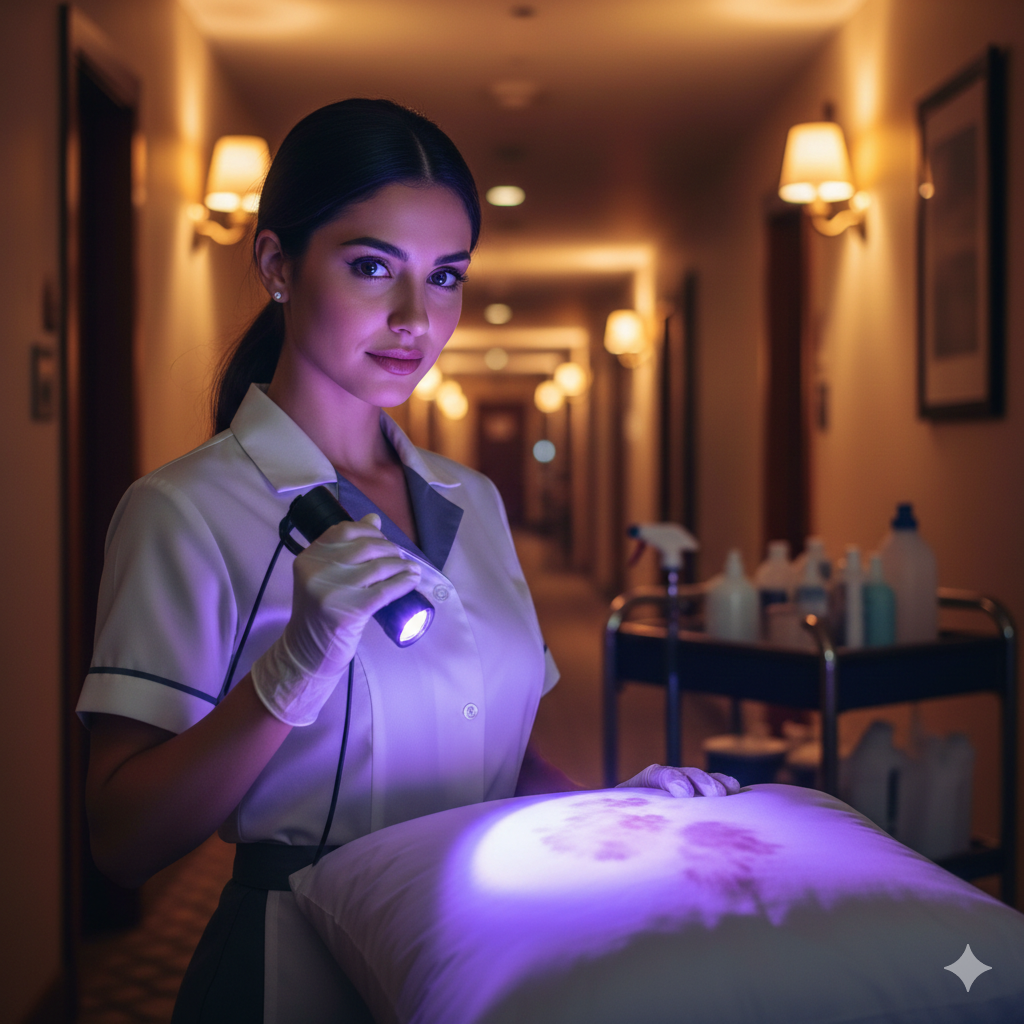
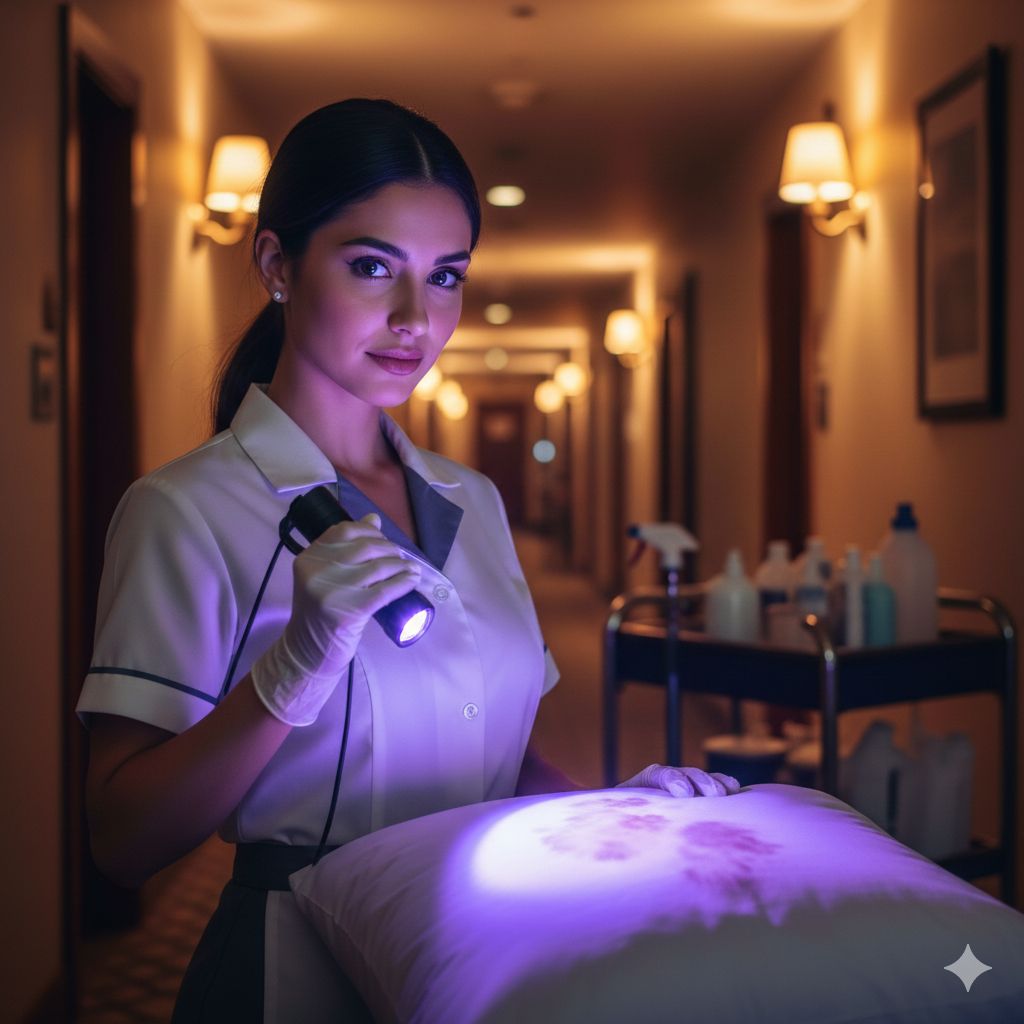
Housekeeping accounts for 45.1% of all hotel service failures, according to hospitality research. That is nearly half of everything that goes wrong in a hotel originating from one department.
The challenge is not that housekeeping staff are careless. The challenge is that the systems designed to catch problems often miss them entirely. Audits that should identify issues before guests do instead give false confidence—until a brand auditor or negative review reveals the truth.
This article examines the 8 most common reasons housekeeping audits fail and provides specific, actionable fixes for each.
Why Housekeeping Failures Matter More
Housekeeping failures disproportionately impact guest perception:
| Metric | Impact |
|---|---|
| Guest satisfaction variance | 27.2% linked to linen quality and cleanliness |
| Repeat booking drop | 15-20% when cleanliness issues mentioned in reviews |
| Top 5 guest complaints | ”Hair in bath,” “trash under bed” consistently ranked |
| Revenue at risk | Cleanliness is #1 factor in booking decisions |
A front desk error frustrates a guest. A housekeeping failure disgusts them. The emotional response is fundamentally different—and far more damaging to reviews and rebooking.
Failure #1: Missed Spots (The Invisible 20%)
What Happens
Approximately 20% of a guest room is rarely inspected: under the bed, behind curtains, inside closets, around window sills, and HVAC vents. These areas accumulate dust, debris, hair, and occasionally—pests.
Room attendants focus on visible surfaces because inspections focus on visible surfaces. The result: consistently clean-looking rooms with consistently dirty hidden areas.
Why Audits Miss This
- Inspectors stand in the center of the room and scan
- Checklists emphasize obvious items (bed, bathroom, desk)
- Time pressure discourages thorough hidden-area checks
- “If I cannot see it, guests cannot see it” mentality
The Fix
| Action | Implementation |
|---|---|
| Add specific hidden-area items to checklist | ”Under bed,” “behind headboard,” “inside closet floor” |
| Require flashlight use | Issue mini flashlights to all inspectors |
| Randomize inspection angle | Start from different positions each inspection |
| Photo documentation | Require photos of 2-3 hidden areas per room |
| Weekly deep-audit | Specific hidden-area focus once per week |
Pro Tip from the Floor: Get on your hands and knees during at least 25% of inspections. If you never change your perspective, you never see what is at floor level.
Failure #2: Poor Linen Management
What Happens
Linen problems appear in multiple forms:
- Stained sheets passed to rooms
- Inconsistent laundering (some items not fully cleaned)
- Worn or damaged linens not removed from rotation
- Incorrect folding or presentation
- Insufficient par levels causing rush decisions
Research indicates hotels lose 20-30% of linen inventory annually due to mismanagement or premature wear.
Why Audits Miss This
- Linens appear clean on visual inspection but have issues only visible up close
- Stains not visible when bed is made but visible when guest uses it
- Worn items pass inspection but feel wrong to guests
- Focus on presentation (tight corners) not condition
The Fix
| Action | Implementation |
|---|---|
| Touch test linens | Run hands over sheets during inspection |
| Light inspection | Hold linens up to light to reveal stains/wear |
| Rotation tracking | Date or color-code linens to ensure rotation |
| Threshold for removal | Establish specific criteria for retirement |
| Par level audit | Ensure adequate stock prevents rushed decisions |
| Laundry quality checks | Sample audit of returned clean linens |
Failure #3: Unreported Maintenance Issues
What Happens
Room attendants identify maintenance problems—leaky faucets, loose outlets, stained ceiling tiles, damaged furniture—but do not report them. These issues persist, multiply, and eventually become audit failures or guest complaints.
Why Audits Miss This
- Auditors focus on cleanliness, not maintenance
- Maintenance issues are “someone else’s department”
- No mechanism for logging issues during cleaning
- Verbal reports are forgotten or not acted upon
- Staff worry about being blamed for finding problems
The Fix
| Action | Implementation |
|---|---|
| Integrate maintenance into cleaning checklist | ”Any maintenance issues? (Y/N)” with required notes |
| Real-time reporting tool | App or form that goes directly to maintenance |
| Zero-blame culture | Reward finding problems, not hiding them |
| Cross-department huddles | Daily housekeeping-maintenance sync |
| Follow-up verification | Track reported issues to resolution |
| Inspect the inspection | Include maintenance items in room audits |
Pro Tip from the Floor: Every room attendant should be trained to ask: “Would I personally be comfortable staying in this room tonight?” If the answer is no, something needs to be reported.
Failure #4: Incomplete Documentation
What Happens
Audits are conducted but not fully documented. Checklists are partially completed. Notes are vague. Photos are not taken. When issues recur, there is no record showing the pattern. When corrective actions are needed, there is no baseline to measure against.
Properties with poor documentation experience 25% higher repeat audit failures because problems are not tracked to root cause.
Why Audits Miss This
- Paper checklists are cumbersome and get lost
- “I will remember to write it down later”
- Pressure to complete inspections quickly
- No accountability for documentation completeness
- Documentation reviewed only when problems occur
The Fix
| Action | Implementation |
|---|---|
| Digital checklist required | Mobile app with mandatory fields |
| Completion validation | System blocks submission if fields empty |
| Photo requirements | Mandatory photos for failed items |
| Review sample audits | Supervisor reviews 10% of documentation daily |
| Trend reporting | Monthly analysis of documented patterns |
| Documentation KPI | Track completion rates by inspector |
Failure #5: Mold, Odors, and Pest Signs
What Happens
Environmental issues—mold growth, musty smells, pest evidence—represent the most critical audit failures because they indicate systemic problems and create health risks. These issues are top-tier reputation risks.
Yet they often go undetected until they are severe because:
- Early signs are subtle (faint smell, tiny spot)
- Staff become nose-blind to persistent odors
- Visible mold is assumed to be “old news” already reported
- Pest evidence in hidden areas is not inspected
Why Audits Miss This
- Odor detection requires fresh perspective
- Mold in grout blends with general discoloration
- Pest evidence (droppings, egg casings) requires close inspection
- These items are not on standard checklists
- Staff do not know what to look for
The Fix
| Action | Implementation |
|---|---|
| ”Fresh nose” protocol | Inspector enters from outside, not from adjacent room |
| Mold-specific training | Visual examples of early-stage mold |
| Pest signs training | What to look for, where to look |
| Weekly environmental check | Specific focus on these issues |
| Immediate escalation | Any finding bypasses normal channels |
| Professional inspections | Quarterly pest/mold assessment by vendor |
Failure #6: Inadequate Training
What Happens
Room attendants are trained on tasks (make bed, clean bathroom) but not on standards (what “clean” actually means). They know to dust, but not that the underside of lamp shades must be dusted. They know to check amenities, but not the specific presentation standard.
Without clear standards, performance varies by individual interpretation.
Why Audits Miss This
- Audits measure output, not knowledge
- Inspector assumes staff know the standard
- Inconsistent results attributed to effort, not training
- Training happened once, years ago
- New standards not cascaded to frontline
The Fix
| Action | Implementation |
|---|---|
| Visual standards guide | Photos of correct and incorrect for each item |
| Competency verification | Test knowledge, not just completion |
| Refresher training schedule | Quarterly mini-trainings on problem areas |
| New hire buddy system | Experienced attendant mentors for 2 weeks |
| Standard changes communicated | All updates demonstrated, not just emailed |
| Audit as teaching moment | Explain why items fail, not just that they failed |
Pro Tip from the Floor: Create a “Wall of Standards” in the housekeeping break room with photos showing exactly what each audit item should look like. Visual references beat written instructions every time.
Failure #7: Audit Fatigue and “Pencil Whipping”
What Happens
Inspectors complete audits without actually inspecting. They walk through the room, mark all items as passed, and move to the next room. This behavior—called “pencil whipping”—invalidates the entire audit system.
Pencil whipping happens when:
- Inspectors are overloaded with rooms
- No one reviews audit results
- Passing is easier than documenting failures
- There are no consequences for missed issues
- Trust in team creates complacency
Why Audits Miss This
- The audit itself is the mechanism that is failing
- Results look good on paper
- Problems only surface when external auditors or guests discover them
- No verification that audits are legitimate
The Fix
| Action | Implementation |
|---|---|
| Photo verification | Require timestamped photos for random items |
| GPS/timestamp validation | Digital audits log location and time |
| Supervisor spot-checks | Re-inspect 10% of “passed” rooms |
| Pattern analysis | Flag inspectors with suspiciously uniform scores |
| Realistic workload | Ensure audit time is scheduled, not squeezed |
| Consequence for fabrication | Clear policy, enforced consistently |
Failure #8: Lack of Follow-Through on Findings
What Happens
Audits identify problems. Documentation captures them. But nothing happens next. The failure is logged, the room is released, and the same failure occurs tomorrow. Without corrective action, audits become administrative exercises with no operational impact.
Why Audits Miss This
- Audit is seen as complete when form is submitted
- No escalation process for recurring issues
- Department head reviews weekly, not daily
- Individual failures not connected to patterns
- “We know about that problem already”
The Fix
| Action | Implementation |
|---|---|
| Same-day correction requirement | Failed items addressed within shift |
| Automatic escalation | Repeated failure triggers supervisor alert |
| Root cause analysis | Three occurrences = formal investigation |
| Closed-loop tracking | Every finding to resolution with documentation |
| Daily huddle review | Failed items discussed at shift start |
| Weekly trend review | Department head analyzes patterns |
The Housekeeping Audit Improvement Framework
Implement these changes in sequence:
Week 1-2: Documentation Upgrade
- Implement digital checklists
- Add photo requirements
- Train on completion standards
Week 3-4: Checklist Enhancement
- Add hidden-area items
- Add maintenance items
- Add environmental items
Week 5-6: Training Refresh
- Visual standards guide created
- Team trained on new standards
- Competency verified
Week 7-8: Verification Systems
- Supervisor spot-checks implemented
- Pattern analysis started
- Escalation procedures activated
Ongoing: Continuous Improvement
- Weekly trend review
- Monthly training refresh on problem areas
- Quarterly environmental deep-audit
Key Performance Indicators for Housekeeping Audits
Track these metrics to measure improvement:
| KPI | Target | Purpose |
|---|---|---|
| Inspection completion rate | 95%+ | Audits actually happening |
| Documentation completeness | 100% | No partial audits |
| Photo compliance | 90%+ | Verification working |
| First-time pass rate | 85%+ | Quality improving |
| Repeat failure rate | <5% | Issues actually corrected |
| Guest cleanliness scores | 4.5+/5 | Ultimate outcome measure |
| Housekeeping-related complaints | <1% of stays | Guest impact |
Key Takeaways
- Housekeeping accounts for 45% of hotel service failures—more than any other department
- Hidden areas are consistently missed—change inspection angles and add specific items
- Linen issues cause 27% of guest satisfaction variance—touch test, not just visual
- Documentation gaps cause 25% more repeat failures—require complete digital records
- Pencil whipping invalidates audits entirely—verify with photos and spot-checks
- Findings without follow-through accomplish nothing—close the loop every time
What to Do Next
- Audit your audits — observe how inspections are actually conducted today
- Review documentation — are records complete, or are fields skipped?
- Check hidden areas yourself — what do you find that audits are missing?
- Map failure to training — do staff know the standard for failed items?
- Implement verification — start spot-checking passed rooms
For a digital housekeeping audit platform with photo verification, pattern analysis, and automatic escalation, schedule a demo →
Related Reading
- The Complete Hotel Room Inspection Checklist
- The 7 Root Causes of Hotel Audit Failures
- Audit Failure Recovery: The 90-Day Action Plan
HAS provides digital housekeeping audits with mandatory photo documentation, hidden-area checklists, and real-time trend analysis. Catch problems before guests do. See how it works →

About the Author
Orvia Team
Hotel Audit Experts
The Orvia team brings decades of combined experience in hospitality operations, quality assurance, and technology. We're passionate about helping hotels maintain exceptional standards.