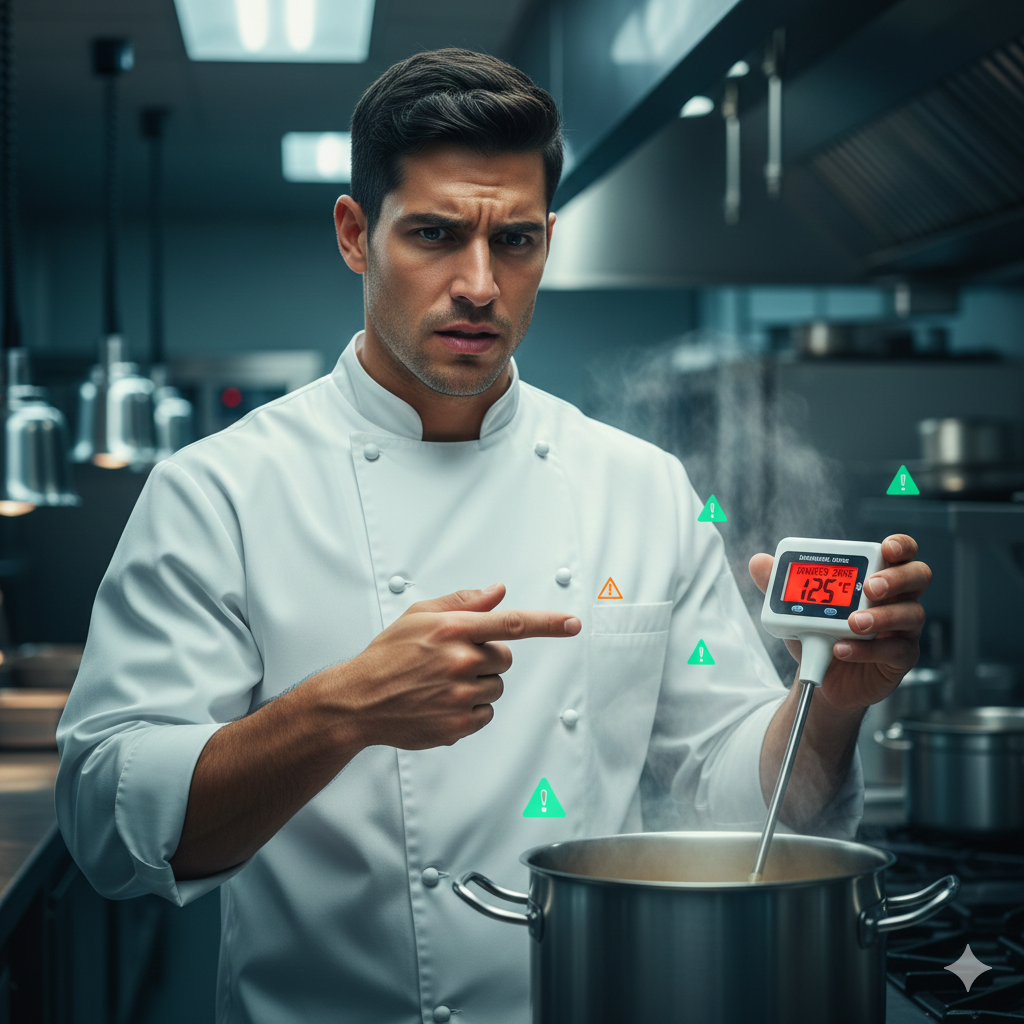
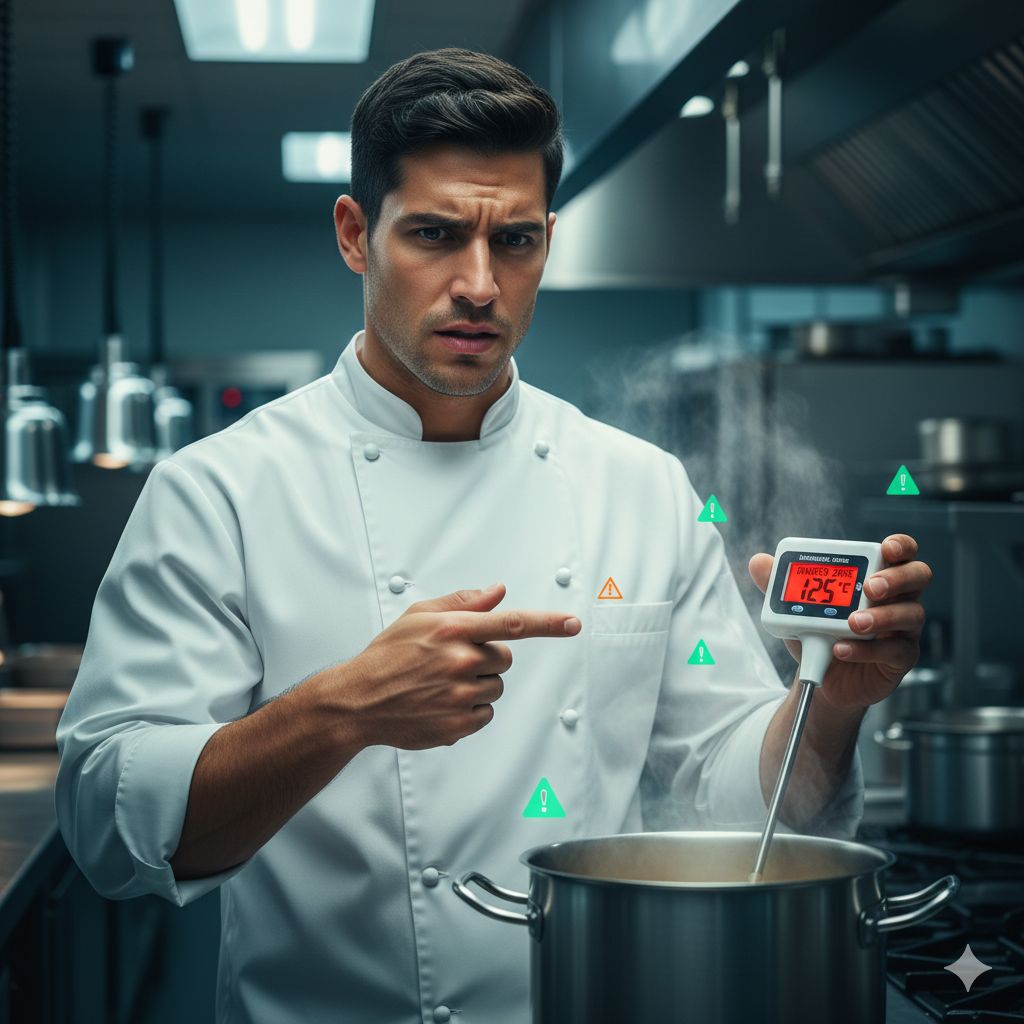
A food safety failure does not announce itself politely. It arrives as a guest complaint, an emergency room visit, or a health inspector at your door. In 2024, the FDA fined a dozen hotels—including five-star properties—for HACCP violations that included expired food, improper temperatures, and staff without food safety certifications. Fines ranged from $1,000 to over $10,000 per violation.
Every year, contaminated food makes approximately 600 million people sick worldwide and leads to 420,000 deaths. Many of these cases occur in hospitality settings and are preventable with proper HACCP implementation.
HACCP (Hazard Analysis and Critical Control Points) is not just a regulatory requirement. It is your systematic defense against foodborne illness, regulatory penalties, and reputation damage that no marketing budget can repair.
This guide covers the 7 critical control points every hotel kitchen must master—and the failures we see most often.
What Is HACCP and Why Hotels Need It
HACCP is a food safety management system that identifies, evaluates, and controls hazards at specific points in food production. Rather than relying on final product testing (by which time contamination has already occurred), HACCP prevents problems before they happen.
For hotels, HACCP applies to:
- Restaurant kitchens
- Room service operations
- Breakfast buffets
- Banquet and event catering
- Pool and bar snacks
- Mini-bar items
Many jurisdictions require HACCP compliance for hotels with food service operations. Beyond legal requirements, HACCP protects your guests and your brand.
The Cost of Non-Compliance
When a hotel fails a food safety inspection, the consequences multiply:
| Impact | Typical Cost |
|---|---|
| Direct fines | $1,000 - $300,000 per violation |
| Temporary closure | $10,000 - $50,000+ per day lost revenue |
| Reputation damage | Incalculable—negative reviews persist for years |
| Liability claims | $50,000 - millions in legal costs |
| Insurance increase | 20-50% premium increase |
A single foodborne illness outbreak traced to your property can result in news coverage, social media backlash, and booking cancellations that impact revenue for months.
The 7 HACCP Principles Applied to Hotels
HACCP is built on seven principles established by the Codex Alimentarius Commission. Here is how each applies specifically to hotel food operations:
Principle 1: Conduct a Hazard Analysis
Before you can control hazards, you must identify them. A hazard analysis examines every step in your food handling process and asks: What could go wrong here?
Hazard Types:
- Biological: Bacteria, viruses, parasites (most common)
- Chemical: Cleaning agents, pesticides, allergens
- Physical: Glass, metal, plastic, hair
Hotel-Specific Hazards:
| Food Operation | Common Hazards |
|---|---|
| Breakfast buffet | Temperature abuse from extended holding |
| Room service | Delayed delivery allowing cooling |
| Banquets | Cross-contamination during high-volume prep |
| Pool bar | Ice contamination, improper drink garnish storage |
Pro Tip from the Floor: Walk through your kitchen during peak service and ask: “If I wanted to make a guest sick, where would it be easiest?” That is where your controls need to be strongest.
Principle 2: Determine Critical Control Points (CCPs)
A Critical Control Point is a step where control can be applied to prevent, eliminate, or reduce a food safety hazard to acceptable levels. Not every step is a CCP—only those where losing control means the hazard cannot be corrected later.
The 7 CCPs Most Hotels Miss:
CCP #1: Receiving
The hazard: Contaminated or temperature-abused food enters your operation.
Control measures:
- Check delivery vehicle temperatures
- Verify product temperatures upon receipt (cold foods below 5°C/41°F, frozen foods below -18°C/0°F)
- Inspect packaging for damage or contamination
- Verify expiration dates before accepting
- Reject deliveries that do not meet standards
Common failure: Accepting deliveries during rush periods without temperature checks. The delivery driver is in a hurry, the kitchen is busy, and the thermometer stays in the drawer.
CCP #2: Cold Storage
The hazard: Bacterial growth from improper refrigeration.
Control measures:
- Refrigerators maintained at 0-5°C (32-41°F)
- Freezers maintained at -18°C (0°F) or below
- Temperature logs checked minimum twice daily
- First-In-First-Out (FIFO) rotation enforced
- Raw and cooked foods separated
- No overstocking that blocks air circulation
Common failure: Temperature logs showing identical readings every day. Real refrigerators fluctuate. If your logs show “4°C” every check for a week, someone is pencil whipping.
Pro Tip from the Floor: Put a digital temperature logger in your walk-in that records continuously. When inspectors see paper logs showing perfect temperatures but your digital logger shows a spike to 12°C (54°F) at 3 AM, you have a serious problem.
CCP #3: Cooking
The hazard: Pathogens surviving undercooked food.
Control measures:
- Internal temperature verification with calibrated thermometers
- Minimum cooking temperatures by food type:
| Food Type | Minimum Internal Temperature |
|---|---|
| Poultry | 74°C (165°F) |
| Ground meats | 71°C (160°F) |
| Pork, beef, lamb (whole cuts) | 63°C (145°F) with 3-minute rest |
| Fish | 63°C (145°F) |
| Eggs (immediate service) | 63°C (145°F) |
| Reheated foods | 74°C (165°F) |
Common failure: Relying on cooking time or visual cues instead of thermometer verification. “It looks done” is not a critical limit.
CCP #4: Cooling
The hazard: Bacterial growth during slow cooling.
This is the most frequently violated CCP in hotel kitchens. The “danger zone” (5°C-60°C / 41°F-140°F) is where bacteria multiply rapidly.
Control measures:
- Cool from 60°C to 21°C (140°F to 70°F) within 2 hours
- Cool from 21°C to 5°C (70°F to 41°F) within 4 additional hours
- Total cooling time: maximum 6 hours
- Use shallow containers, ice baths, or blast chillers
- Never put large quantities of hot food directly in refrigerator
Common failure: Making a large pot of soup at 4 PM, putting it in the walk-in at 6 PM, and finding it at 15°C (59°F) the next morning. The center never cooled properly.
Pro Tip from the Floor: The two-stage cooling rule is the most violated CCP we see. Post it on the wall: “Cool to 70°F in 2 hours. Cool to 41°F in 4 more hours. Total: 6 hours maximum.”
CCP #5: Hot Holding
The hazard: Temperature abuse during service.
Buffets, banquets, and breakfast stations are high-risk areas. Food that starts at proper temperature can drop into the danger zone during extended service.
Control measures:
- Maintain hot foods at 60°C (140°F) or above
- Check temperatures every 30 minutes during service
- Discard any food held below 60°C for more than 2 hours
- Do not use hot holding to reheat food
- Keep lids on when possible
Common failure: The breakfast buffet opens at 6 AM with scrambled eggs at 75°C (167°F). By 9 AM, they have been sitting at 52°C (126°F) for two hours because the chafing dish fuel ran out.
CCP #6: Cold Holding
The hazard: Temperature abuse of cold foods on display.
Salad bars, cold appetizers, and dessert displays require the same vigilance as hot foods.
Control measures:
- Maintain cold foods at 5°C (41°F) or below
- Use ice beds, refrigerated display units, or time limits
- If displayed above 5°C, use within 4 hours maximum
- Never mix fresh product with product that has been on display
Common failure: The seafood display at the banquet looked beautiful at 6 PM. By 10 PM, the ice has melted, the shrimp are at room temperature, and 50 guests are about to have a memorable evening.
CCP #7: Cross-Contamination Prevention
The hazard: Pathogens transferred from raw to ready-to-eat foods.
Cross-contamination is not a single step but a continuous CCP that applies throughout operations.
Control measures:
- Color-coded cutting boards (red for raw meat, green for vegetables, etc.)
- Separate storage areas for raw and cooked foods
- Handwashing stations available and stocked
- Clean and sanitize surfaces between tasks
- Staff training on contamination pathways
Common failure: The prep cook slices raw chicken, wipes the knife on a towel, and starts cutting vegetables for the salad bar. No handwashing, no board change, no surface sanitization.
Pro Tip from the Floor: Watch your kitchen during a rush. Contamination happens when staff are moving fast and cutting corners. That is exactly when controls matter most.
Digital vs. Paper Temperature Logging
Paper temperature logs are the industry standard—and the industry weakness.
The Paper Problem
- Logs get lost, damaged, or completed retroactively
- No verification that checks actually occurred at logged times
- Easy to falsify (“pencil whipping”)
- No alerts when temperatures exceed critical limits
- Difficult to identify trends or recurring issues
- Inspectors know paper logs are unreliable
The Digital Advantage
Modern digital temperature monitoring provides:
| Feature | Benefit |
|---|---|
| Automatic logging | Continuous recording without manual entry |
| Timestamped records | Proof that checks occurred when logged |
| Real-time alerts | Immediate notification when limits exceeded |
| Trend analysis | Identify equipment issues before failures |
| Audit trail | Uneditable records for inspector review |
| Remote monitoring | Check status from anywhere |
When inspectors see digital logs with continuous data, timestamped entries, and documented corrective actions, they know your HACCP system is real—not theater.
Common Hotel HACCP Failures (And How to Avoid Them)
Based on inspection data and industry reports, these are the most common HACCP failures in hotels:
Failure #1: Expired Food Items
Dried goods and frozen items are frequently overlooked because they have long shelf lives. But “long” is not “infinite.”
Prevention:
- Implement FIFO rotation with dated labels
- Conduct weekly expired product sweeps
- Train staff that expired items are never acceptable
Failure #2: Temperature Documentation Gaps
Missing temperature logs for weekends, holidays, or night shifts are red flags.
Prevention:
- Assign specific staff to each monitoring shift
- Use digital monitoring for continuous coverage
- Create accountability for documentation gaps
Failure #3: Staff Without Certification
Many jurisdictions require food handlers to have valid certifications. Hotels frequently have certified managers but uncertified line staff.
Prevention:
- Track certification status for all food-handling staff
- Schedule renewals before expiration
- Include certification status in HR onboarding
Failure #4: Improper Cooling Documentation
Even when cooling is done correctly, failure to document the cooling curve means failure during inspections.
Prevention:
- Log temperature at start of cooling
- Log temperature at 2-hour mark
- Log temperature when food reaches 5°C (41°F)
- Record cooling method used
Failure #5: Cross-Contamination During High-Volume Events
Banquets and large events create pressure that leads to shortcuts.
Prevention:
- Pre-stage all equipment before events
- Assign dedicated staff to sanitation during events
- Conduct mid-event spot checks
Building a HACCP-Ready Kitchen
HACCP success requires three elements working together:
1. Documentation System
Your documentation must be:
- Accessible (staff can find forms quickly)
- Simple (one page per CCP is ideal)
- Verifiable (timestamped, signed, or digital)
- Stored (available for inspector review)
2. Training Program
All food-handling staff need:
- Initial HACCP training before handling food
- Annual refresher training
- CCP-specific training for their role
- Documentation of all training completed
3. Verification Process
Trust but verify:
- Daily temperature log review by supervisor
- Weekly CCP audit by management
- Monthly corrective action review
- Quarterly mock inspections
Temperature Logging Template
Use this framework to build your temperature monitoring system:
Cold Storage Log
| Date | Time | Unit | Temp (°C) | Temp (°F) | Within Limit? | Initials | Corrective Action |
|---|---|---|---|---|---|---|---|
| Walk-in 1 | Yes/No | ||||||
| Walk-in 2 | Yes/No | ||||||
| Reach-in 1 | Yes/No | ||||||
| Freezer 1 | Yes/No |
Critical Limits:
- Refrigerators: 0-5°C (32-41°F)
- Freezers: -18°C (0°F) or below
Corrective Actions if Out of Range:
- Check product temperatures immediately
- Discard any product above 8°C (46°F)
- Move remaining product to functioning unit
- Report equipment issue to maintenance
- Document all actions taken
Key Takeaways
- HACCP is proactive, not reactive. Control hazards before they become problems.
- The 7 CCPs are: Receiving, Cold Storage, Cooking, Cooling, Hot Holding, Cold Holding, and Cross-Contamination Prevention. Master all seven.
- Cooling is the #1 failure point. The two-stage cooling rule trips up most hotels.
- Paper logs are a liability. Digital monitoring provides evidence that paper cannot.
- Documentation proves compliance. If you did not document it, you did not do it.
- Staff training must be continuous. Annual training is not enough for high-turnover environments.
What to Do Next
- Audit your current CCPs. Are all seven actively monitored?
- Review your temperature logs. Do they show real variance or suspicious consistency?
- Check staff certifications. Is everyone current?
- Schedule a mock inspection. Find problems before the inspector does.
For detailed guidance on temperature logging systems, read our guide: Food Safety Temperature Logging: Why Paper Fails.
The HAS platform includes HACCP-compliant temperature logging, real-time alerts, and digital documentation that inspectors trust. See how it works →

About the Author
Orvia Team
Hotel Audit Experts
The Orvia team brings decades of combined experience in hospitality operations, quality assurance, and technology. We're passionate about helping hotels maintain exceptional standards.