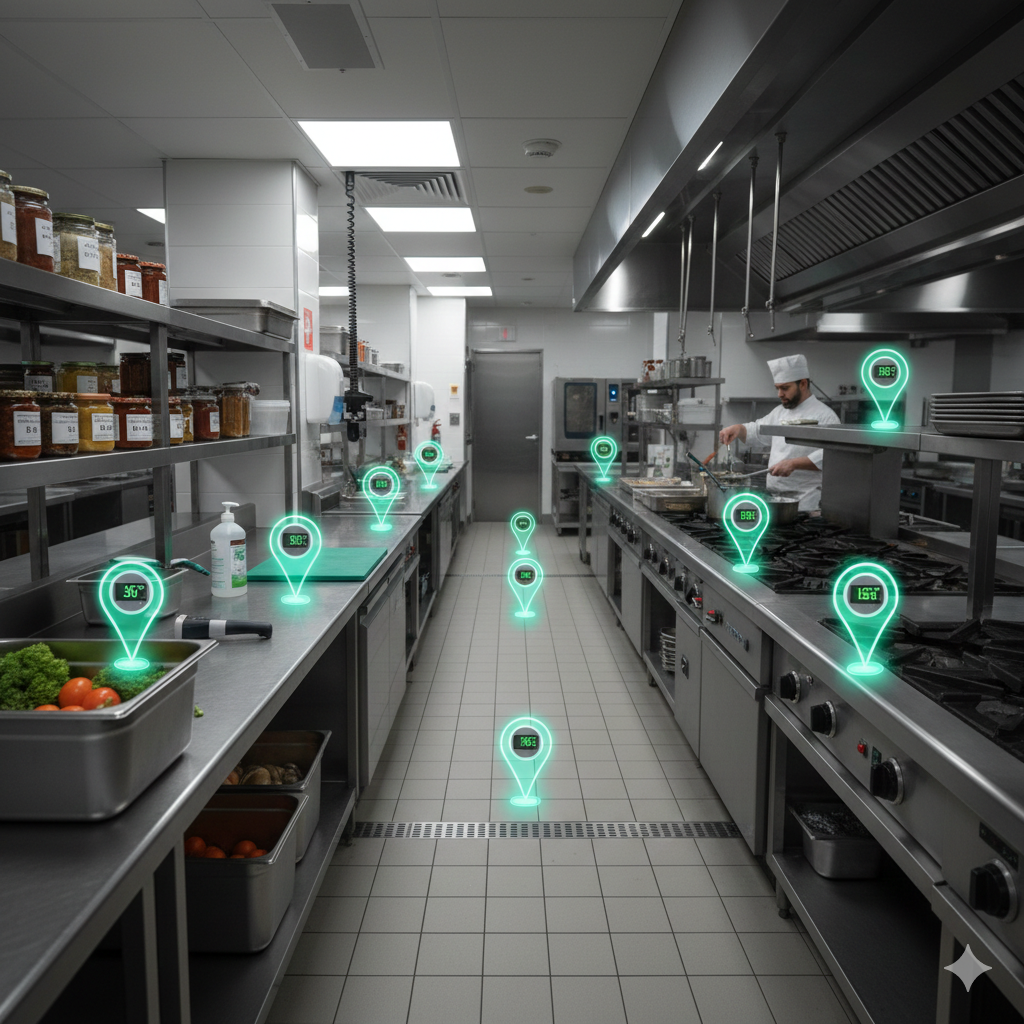
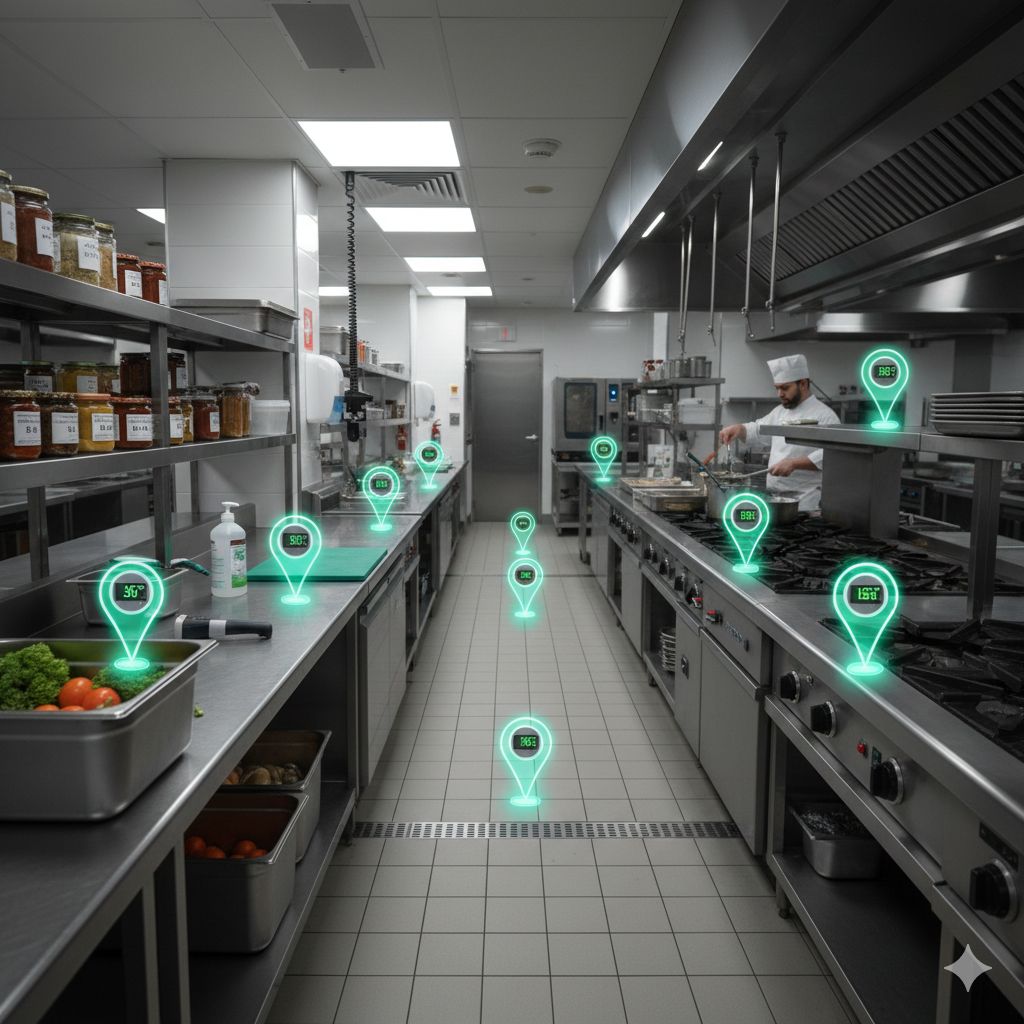
Why Kitchen Sanitation Audits Matter More Than Ever
When a health inspector walks into your kitchen, what they find in the next 90 minutes can determine whether your restaurant or hotel keeps its doors open. In 2025, food safety violations led to over 12,000 temporary closures across the United States alone. The stakes have never been higher.
For hospitality Quality Assurance (QA) leaders, kitchen sanitation audits are not optional—they are critical operational insurance. A systematic audit following HACCP (Hazard Analysis and Critical Control Points) principles protects your guests, your team, and your reputation.
HACCP stands for Hazard Analysis and Critical Control Points. It is a systematic, science-based approach to identifying, evaluating, and controlling food safety hazards throughout the entire food production process.
Pro Tip from the Floor: “We run HACCP audits weekly, not monthly. The cost of one foodborne illness outbreak—in legal fees, lost revenue, and reputation damage—far exceeds the time investment of regular audits.” — Maria Gonzalez, QA Director, Regional Hotel Chain
This guide provides a complete HACCP-based kitchen sanitation audit walkthrough, breaking down each critical control point from receiving to cleaning.
Understanding HACCP: The Foundation of Food Safety
The Seven HACCP Principles
HACCP is built on seven core principles that form the framework for all food safety programs:
- Conduct a Hazard Analysis: Identify potential biological, chemical, and physical hazards at each step of food handling.
- Determine Critical Control Points (CCPs): Identify points where hazards can be prevented, eliminated, or reduced to safe levels.
- Establish Critical Limits: Set measurable maximum or minimum values for each CCP (temperature, time, pH).
- Establish Monitoring Procedures: Define how to measure and record CCPs consistently.
- Establish Corrective Actions: Determine what to do when a CCP fails to meet critical limits.
- Establish Verification Procedures: Confirm the HACCP system is working through audits and testing.
- Establish Record-Keeping and Documentation: Maintain logs, temperatures, and audit reports for compliance.
In hospitality operations, HACCP is not just a regulatory requirement—it is a proven system that reduces food safety incidents by up to 90% when properly implemented.
Pro Tip from the Floor: “Print HACCP flowcharts and post them at each station. When new staff see the critical control points every shift, compliance becomes second nature.” — David Chen, Executive Chef, Luxury Resort
Pre-Audit Preparation: Setting Up for Success
Before conducting a kitchen sanitation audit, proper preparation ensures thorough, consistent evaluation:
Audit Team Preparation
- Assemble your audit kit: Calibrated thermometers (digital probe, infrared), flashlight, notebook, camera (time-stamped photos), sanitizer test strips, pH meter.
- Review previous audit findings: Identify recurring issues and focus areas.
- Schedule during peak operations: Audits during busy shifts reveal real-world practices, not just best-case scenarios.
- Notify or conduct unannounced: Announced audits allow staff to prepare; unannounced audits capture actual daily operations.
Documentation Review
- HACCP Plan: Review the facility’s written HACCP plan before walking the floor.
- Temperature Logs: Check cold holding, hot holding, cooking, and cooling logs for the past 7 days.
- Cleaning Schedules: Review master sanitation schedules and recent completion records.
- Training Records: Verify all food handlers have current food safety certifications.
HACCP Kitchen Audit Walkthrough: Critical Control Points
CCP 1: Receiving and Inspection
Hazard: Contaminated food enters the facility, spoiled products are accepted.
Critical Limits:
- Cold food delivered at 41°F (5°C) or below
- Frozen food delivered at 0°F (-18°C) or below
- Hot food (if applicable) delivered at 135°F (57°C) or above
Audit Checklist:
- Receiving area is clean, organized, and well-lit
- Staff check temperature of all TCS (Time/Temperature Control for Safety) foods upon delivery
- Thermometer is calibrated and available at receiving dock
- Rejected products are documented and returned to vendor immediately
- Packaging is intact, no signs of pest infestation or damage
- Delivery vehicles are clean and temperature-controlled
- Staff inspect produce for bruising, mold, or spoilage
- FIFO (First In, First Out) labels are applied to all incoming products
Pro Tip from the Floor: “We reject any delivery if the driver refuses to let us temp-check proteins. No exceptions. You cannot assume food safety—you must verify it.” — Jennifer Park, Food Safety Manager, Multi-Property Hotel Group
Corrective Actions:
- Reject any food not meeting temperature requirements
- Document rejection in receiving log with vendor name, product, temperature, and reason
- Contact vendor immediately to arrange replacement or credit
Record Keeping:
- Receiving log with date, time, vendor, product, quantity, temperature, and staff initials
CCP 2: Storage (Cold, Dry, and Frozen)
Hazard: Cross-contamination, temperature abuse, pest infestation, expired products.
Critical Limits:
- Walk-in coolers: 35-38°F (2-3°C)
- Walk-in freezers: 0°F (-18°C) or below
- Dry storage: 50-70°F (10-21°C), relative humidity below 60%
Audit Checklist:
Cold Storage:
- Walk-in cooler thermometer reads within range (35-38°F / 2-3°C)
- Digital temperature logs are current and accurate
- Raw proteins stored on lowest shelves, separate from ready-to-eat foods
- All food covered, labeled, and dated
- No pooling water, no ice buildup on freezer walls
- FIFO system is enforced (older products in front)
- No cardboard storage (absorbs moisture, attracts pests)
- Door seals are intact, no air leaks
Dry Storage:
- Products stored 6 inches off floor on shelving
- Chemicals stored separately from food items
- No pest activity (droppings, gnaw marks, live sightings)
- Ventilation adequate, no musty odors
- Expired products removed immediately
Freezer Storage:
- Temperature at or below 0°F (-18°C)
- Products wrapped tightly to prevent freezer burn
- No excessive frost buildup (indicates temperature fluctuations)
Pro Tip from the Floor: “Color-coded shelving tape works wonders. Red tape on bottom shelf means ‘raw proteins only.’ It is a visual reminder even when staff are rushing.” — Roberto Martinez, Kitchen Manager, Casino Resort
Corrective Actions:
- Move any misplaced items immediately (raw above ready-to-eat)
- Discard any food stored at unsafe temperatures for more than 4 hours
- Schedule deep cleaning if condensation, mold, or pests are found
- Repair faulty refrigeration units immediately
Record Keeping:
- Temperature logs (checked minimum twice daily)
- Storage inspection checklist (weekly)
- Pest control service logs (monthly)
CCP 3: Preparation and Handling
Hazard: Cross-contamination between raw and ready-to-eat foods, bare-hand contact with ready-to-eat foods, inadequate handwashing.
Critical Limits:
- No bare-hand contact with ready-to-eat foods (use gloves, tongs, deli paper)
- Separate cutting boards and utensils for raw proteins vs. produce
- Handwashing minimum 20 seconds with soap and warm water
Audit Checklist:
- Staff wash hands upon entering prep area, after handling raw proteins, after touching face/hair
- Handwashing sinks stocked with soap, paper towels, and signage
- Color-coded cutting boards in use (red for raw meat, green for produce, yellow for poultry, etc.)
- Separate prep areas for raw proteins and ready-to-eat foods when possible
- Gloves changed between tasks and after handling raw proteins
- No cross-contamination observed (same knife used for raw chicken and salad)
- Prep surfaces sanitized between tasks
- Food is thawed safely (under refrigeration, never at room temperature)
- Prep sink is not used as handwashing sink
Pro Tip from the Floor: “Mount a second handwash sink if your kitchen only has one. Health inspectors look for this. Staff compliance doubles when sinks are convenient.” — Linda Wu, Director of Food Safety, Resort & Spa
Corrective Actions:
- Discard any ready-to-eat food that contacted raw proteins
- Re-train staff immediately on proper handwashing and glove use
- Sanitize all prep surfaces and utensils
- Add additional handwashing stations if staff compliance is low
Record Keeping:
- Handwashing compliance observation log
- Cross-contamination incident reports
- Sanitation task completion log
CCP 4: Cooking Temperatures
Hazard: Undercooked food allows pathogenic bacteria to survive, leading to foodborne illness.
Critical Limits (USDA/FDA Minimum Internal Temperatures):
- Poultry (chicken, turkey, duck): 165°F (74°C) for 15 seconds
- Ground meats (beef, pork, lamb): 155°F (68°C) for 15 seconds
- Whole cuts of beef, pork, lamb: 145°F (63°C) for 15 seconds, then rest 3 minutes
- Fish and seafood: 145°F (63°C) for 15 seconds
- Eggs (immediate service): 145°F (63°C) for 15 seconds
- Eggs (held for service): 155°F (68°C) for 15 seconds
Audit Checklist:
- Digital probe thermometers available at all cooking stations
- Thermometers calibrated regularly (ice bath method: 32°F / 0°C)
- Staff temping thickest part of product, not touching bone or pan
- Cooking temperature logs maintained for each shift
- Batch cooking is logged with time and temperature
- No undercooking to “finish in the oven later”
- Staff verify temperatures before service, not guessing doneness by appearance
Pro Tip from the Floor: “We have line cooks initial every temp log entry. Accountability skyrockets when their name is on the record. It is not micromanagement—it is protection for them and the guests.” — Carlos Sanchez, Banquet Chef, Convention Center Hotel
Corrective Actions:
- Continue cooking any food not meeting minimum temperature
- Discard food that has been held below safe temperature for more than 2 hours
- Re-calibrate thermometers if readings are inconsistent
- Retrain staff on proper temping techniques
Record Keeping:
- Cooking temperature log (product, time, temperature, staff initials)
- Thermometer calibration log (weekly or after drops)
CCP 5: Hot Holding and Cold Holding
Hazard: Food held in the “danger zone” (41-135°F / 5-57°C) allows rapid bacterial growth.
Critical Limits:
- Hot holding: 135°F (57°C) or above
- Cold holding: 41°F (5°C) or below
Audit Checklist:
Hot Holding:
- Steam tables, heat lamps, hot boxes maintain 135°F (57°C) or above
- Food temperatures checked every 2 hours
- Hot holding units preheated before placing food
- Food is not being reheated in hot holding equipment (must reheat to 165°F first)
- Lids or covers used to retain heat and moisture
Cold Holding:
- Salad bars, cold buffets, prep coolers maintain 41°F (5°C) or below
- Ice baths are used when refrigeration is not available (ice level maintained above food level)
- Cold holding units have thermometers visible and accurate
- No room-temperature holding of prepared foods
Pro Tip from the Floor: “We replaced buffet chafing dishes with induction warmers. Temperature consistency improved by 20 degrees, and health inspector compliments went up.” — Angela Torres, Catering Director, Full-Service Hotel
Corrective Actions:
- Discard any food held below 135°F (hot) or above 41°F (cold) for more than 4 hours
- Adjust equipment settings or repair malfunctioning units
- Reheat hot food to 165°F if it drops below 135°F
Record Keeping:
- Hot/cold holding temperature log (every 2 hours)
- Equipment maintenance log
CCP 6: Cooling Procedures
Hazard: Improper cooling allows bacterial growth in cooked foods, especially in large batches.
Critical Limits (FDA Food Code):
- Cool from 135°F (57°C) to 70°F (21°C) within 2 hours
- Cool from 70°F (21°C) to 41°F (5°C) within an additional 4 hours
- Total cooling time: 6 hours from 135°F to 41°F
Audit Checklist:
- Large batches divided into shallow pans (2 inches deep maximum)
- Ice baths or blast chillers used to accelerate cooling
- Food loosely covered during cooling (tight covers trap heat)
- Cooling logs document start time, 2-hour temp, 6-hour temp
- Walk-in cooler not overloaded (restricts air circulation)
- Cooling racks used to elevate pans and increase airflow
Pro Tip from the Floor: “We invested in a blast chiller five years ago. It paid for itself in reduced food waste within six months. Soups, stocks, sauces all cool safely in 90 minutes instead of overnight.” — Michael Tran, Executive Sous Chef, AAA Four Diamond Hotel
Corrective Actions:
- Discard any food that did not cool properly (missed 2-hour or 6-hour window)
- Immediately transfer improperly cooled food to smaller containers and ice baths
- Repair or replace malfunctioning cooling equipment
Record Keeping:
- Cooling log (product, batch size, start time, 2-hour temp, 6-hour temp, staff initials)
CCP 7: Serving and Service Line
Hazard: Cross-contamination during service, bare-hand contact with ready-to-eat foods, reuse of soiled utensils.
Critical Limits:
- Utensils replaced or cleaned every 4 hours during continuous service
- No bare-hand contact with ready-to-eat foods
- Single-use gloves discarded between tasks
Audit Checklist:
- Service utensils (tongs, ladles, spoons) stored in food or in running water at 135°F (57°C) or above
- Staff use gloves, deli paper, or utensils for ready-to-eat foods
- Gloves changed after touching face, hair, raw proteins, or cash register
- Buffet sneeze guards installed and properly positioned (14 inches above food)
- Self-service areas monitored and restocked frequently
- No customers handling unwrapped foods with bare hands
Pro Tip from the Floor: “We placed utensil bins at 4-hour intervals on our service line. When the timer goes off, the entire set gets swapped and washed. Zero guesswork, zero violations.” — Patricia Lee, QA Manager, Casino Buffet
Corrective Actions:
- Discard any food contacted by bare hands or soiled utensils
- Replace all service utensils immediately
- Retrain staff on proper glove use and service hygiene
Record Keeping:
- Service line monitoring log
- Buffet/service station sanitation checklist
CCP 8: Sanitation and Cleaning
Hazard: Inadequate cleaning allows bacteria, allergens, and pests to thrive. Improper sanitizer concentration fails to kill pathogens.
Critical Limits:
- Sanitizer concentration (quaternary ammonium: 200 ppm, chlorine: 50-100 ppm)
- Three-compartment sink method: Wash (soap), Rinse (clean water), Sanitize (chemical immersion for 30 seconds)
- Clean-as-you-go during production, deep cleaning during off-hours
Audit Checklist:
Three-Compartment Sink:
- Sink properly set up: Wash, Rinse, Sanitize
- Sanitizer test strips available and in use
- Water temperature adequate (110°F / 43°C for wash sink)
- Air-drying racks available (no towel drying)
Cleaning Schedules:
- Master sanitation schedule posted and followed
- Daily cleaning tasks completed and logged
- Weekly deep cleaning tasks completed (hoods, drains, walls, floors)
- Monthly tasks completed (equipment disassembly, deep scrubbing)
Surface Sanitation:
- Food contact surfaces sanitized after each use
- Cutting boards free of deep grooves or staining (replace worn boards)
- Can openers, slicers, and mixers disassembled and cleaned daily
Floor and Drain Maintenance:
- Floors swept and mopped at end of each shift
- Drains cleaned and sanitized weekly
- No pooling water or grease buildup
- Mats cleaned and dried daily
Pro Tip from the Floor: “Test your sanitizer every hour during service. Concentration drops as water gets dirty. We keep a color chart at the dish pit—if the test strip does not match, staff know to refresh the sanitizer immediately.” — James O’Connor, Kitchen Steward, Conference Center Hotel
Corrective Actions:
- Increase sanitizer concentration if test strips show inadequate levels
- Re-clean any surfaces that failed visual inspection
- Schedule equipment repair or replacement if cleaning is ineffective due to damage
Record Keeping:
- Master sanitation schedule with completion signatures
- Sanitizer concentration test log (hourly during peak service)
- Deep cleaning completion log (weekly and monthly)
Common Kitchen Sanitation Failures and How to Prevent Them
Failure #1: Inconsistent Temperature Monitoring
Problem: Staff skip temperature checks during busy shifts, leading to undetected temperature abuse.
Prevention:
- Use digital temperature monitoring systems with automatic alerts
- Schedule temperature checks at fixed times (not “when you have time”)
- Assign one staff member per shift as “temperature monitor”
Failure #2: Cross-Contamination from Improper Storage
Problem: Raw proteins stored above ready-to-eat foods, leading to drips and contamination.
Prevention:
- Install color-coded shelving (red for raw, green for produce, blue for ready-to-eat)
- Conduct weekly storage audits with photos
- Retrain staff on FIFO and safe storage hierarchy
Failure #3: Inadequate Hand Hygiene
Problem: Staff do not wash hands frequently enough or thoroughly enough.
Prevention:
- Install hands-free handwashing stations (foot pedals, sensor faucets)
- Use timers or posters showing 20-second handwashing technique
- Conduct random hand hygiene audits and provide immediate feedback
Failure #4: Sanitizer Concentration Drift
Problem: Dish pit sanitizer becomes diluted or contaminated, failing to kill pathogens.
Prevention:
- Test sanitizer concentration every hour (or use automatic dispensers)
- Post color-match chart for test strips at eye level
- Replace sanitizer solution every 4 hours or when visibly soiled
Failure #5: Cooling Failures in Large Batches
Problem: Large pots of soup, stock, or rice cool too slowly, allowing bacterial growth.
Prevention:
- Use shallow pans (2 inches deep maximum)
- Invest in blast chillers or ice wands for rapid cooling
- Divide large batches into multiple smaller containers
Digital Tools for Modern Kitchen Sanitation Audits
Traditional paper-based HACCP logs are prone to errors, tampering, and loss. Modern hospitality operations are transitioning to digital audit systems that improve accuracy, compliance, and traceability.
Benefits of Digital Kitchen Audit Systems
- Real-time temperature alerts: Automated systems send alerts when coolers, freezers, or hot holding equipment fall out of range.
- Photo documentation: Capture evidence of violations or excellent practices directly in the audit report.
- Automatic corrective action workflows: Assign tasks immediately when failures are detected.
- Centralized reporting: Multi-property operations can compare kitchen sanitation scores across locations.
- Regulatory compliance: Digital logs are tamper-proof and provide complete audit trails for health inspectors.
Pro Tip from the Floor: “We switched to digital audits two years ago. Health inspector visits are now 30 minutes instead of 3 hours because all logs are instantly accessible on a tablet.” — Sandra Kim, Director of QA, Boutique Hotel Collection
HAS (Hotel Audit System) is specifically designed for hospitality operations, offering offline-first kitchen sanitation audits that sync automatically when internet is available. QA teams can conduct audits on tablets or mobile devices, even in walk-in coolers with no WiFi.
Request a demo to see how HAS streamlines kitchen sanitation audits with HACCP templates, real-time corrective actions, and multi-property reporting.
Audit Frequency: How Often Should You Conduct Kitchen Sanitation Audits?
Internal Audits
- Daily: Quick line checks (temperatures, handwashing, surface sanitation)
- Weekly: Full HACCP audit covering all critical control points
- Monthly: Deep inspection including equipment disassembly, pest control review, and training verification
External Audits
- Health Department Inspections: Frequency varies by jurisdiction (typically 1-2 times per year)
- Third-Party Audits: Recommended quarterly for multi-property operations or annual for single-site operations
- Brand Standard Audits: Franchise or chain audits per brand requirements (quarterly or bi-annual)
Pro Tip from the Floor: “We conduct internal HACCP audits weekly, but we also hire a third-party auditor twice a year. External auditors catch things we miss—it is like a second set of eyes protecting us.” — Thomas Rivera, Regional QA Director, Multi-Brand Hotel Group
Training Your Team for HACCP Compliance
The most comprehensive HACCP audit system is only as effective as the staff executing it daily. Ongoing training is non-negotiable.
Essential Training Topics
- Food Handler Certification: All kitchen staff must complete ServSafe or equivalent certification.
- HACCP Principles: Explain the “why” behind each control point, not just the “how.”
- Temperature Monitoring: Hands-on practice with thermometers and logging procedures.
- Cross-Contamination Prevention: Color-coding systems, separation practices, and handwashing.
- Cleaning and Sanitation: Three-compartment sink procedures, sanitizer testing, and master sanitation schedules.
Training Frequency
- New hires: Food safety training during onboarding (before unsupervised work)
- Quarterly refreshers: Review most common violations and seasonal hazards
- Annual recertification: Update food handler certifications and review updated regulations
Pro Tip from the Floor: “We pair new hires with a ‘HACCP buddy’ for their first 30 days. Peer mentoring reduces training time by half and builds accountability into the culture.” — Elena Rodriguez, Training Coordinator, Resort & Casino
Post-Audit: Corrective Actions and Continuous Improvement
The audit is not complete when the checklist is finished. Corrective actions and follow-up verification are critical to HACCP compliance.
Corrective Action Response Plan
- Immediate Actions: Address critical violations on the spot (discard unsafe food, repair broken equipment).
- Root Cause Analysis: Determine why the violation occurred (training gap, equipment failure, process flaw).
- Preventive Measures: Implement changes to prevent recurrence (new equipment, updated procedures, additional training).
- Verification: Re-audit within 7 days to confirm corrective actions are effective.
Scoring and Benchmarking
Track audit scores over time to identify trends:
- 90-100%: Excellent compliance, minor improvements needed
- 80-89%: Good performance, focus on recurring issues
- 70-79%: Needs improvement, schedule retraining and follow-up audit
- Below 70%: Critical deficiencies, immediate intervention required
Pro Tip from the Floor: “We post kitchen audit scores in the break room every week. Friendly competition between shifts has driven scores from 75% to 92% in six months.” — Gregory Foster, Executive Chef, Luxury Resort
Conclusion: Kitchen Sanitation Audits Protect What Matters Most
HACCP-based kitchen sanitation audits are the foundation of safe, compliant hospitality operations. They protect your guests from foodborne illness, your staff from unsafe working conditions, and your business from regulatory penalties and reputation damage.
By implementing a structured audit system with clear critical control points, measurable critical limits, and documented corrective actions, QA leaders can ensure consistent, verifiable food safety across all kitchen operations.
Key Takeaways:
- HACCP audits cover seven critical control points from receiving to cleaning
- Temperature monitoring, cross-contamination prevention, and sanitation are the most common failure points
- Digital audit systems improve compliance, traceability, and multi-property reporting
- Regular internal audits combined with third-party verification provide the strongest protection
- Staff training and accountability are essential for sustained HACCP compliance
Ready to digitize your kitchen sanitation audits? Request a demo to see how HAS simplifies HACCP compliance with offline-first mobile audits, real-time corrective actions, and regulatory-ready reporting.
Related Resources
- Food Safety Training: Building a Culture of Compliance
- Multi-Property Audit Consistency: Standardizing QA Across Locations
- Common Audit Failures and How to Fix Them
Published January 26, 2026 | Updated regularly to reflect current FDA and USDA guidelines

About the Author
Orvia Team
Hotel Audit Experts
The Orvia team brings decades of combined experience in hospitality operations, quality assurance, and technology. We're passionate about helping hotels maintain exceptional standards.