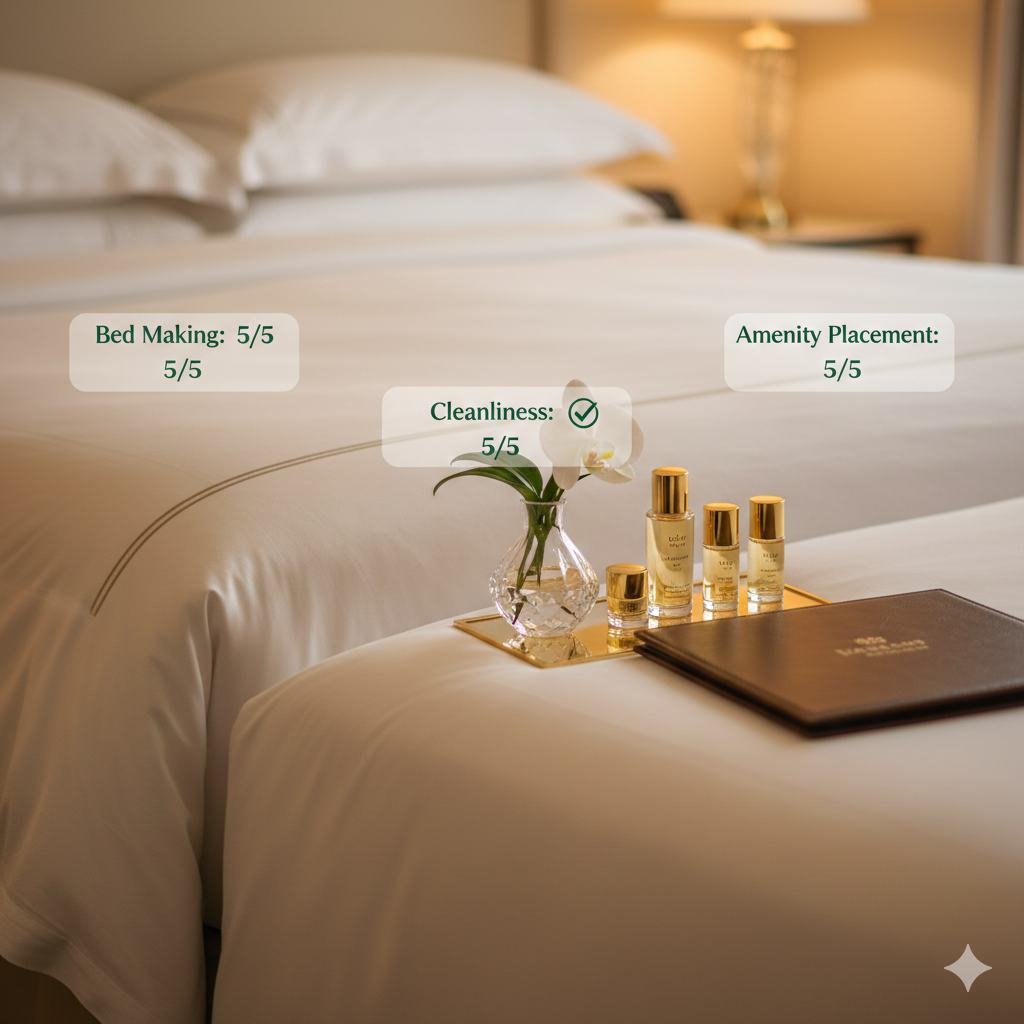
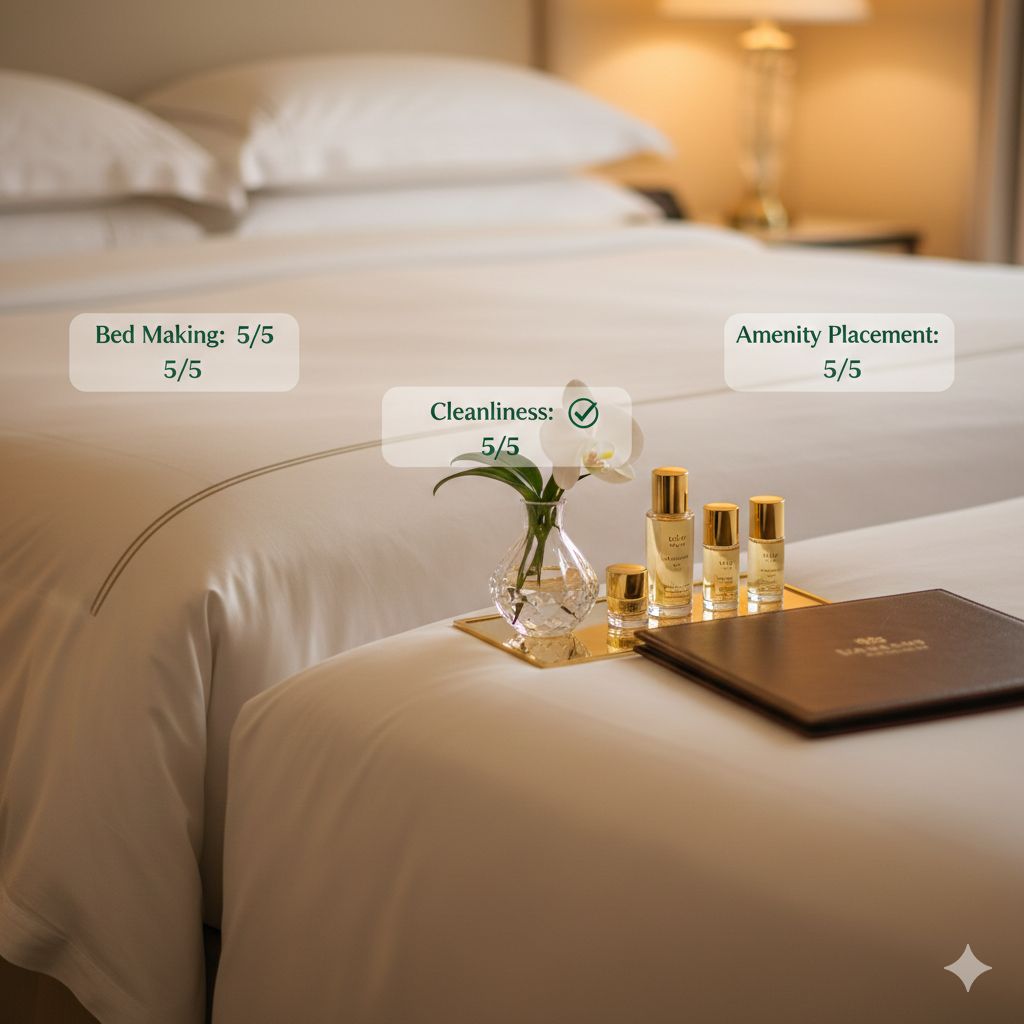
Your property scores 88 percent on internal audits. Guest satisfaction ratings are strong. Online reviews are positive. Then the LQA inspector arrives, and three days later, you receive a score of 71 percent.
What happened?
LQA (Leading Quality Assurance) standards operate at a level of detail that internal programs rarely match. With more than 800 individual criteria spanning eight performance areas—and up to 272 standards focused specifically on emotional intelligence—LQA evaluates not just what your team does, but how they make guests feel while doing it.
Pro Tip from the Floor: “The first time we went through an LQA assessment, I thought our team was prepared. We had rehearsed the service sequences. We had polished every surface. But we scored poorly on emotional intelligence because our team was so focused on the ‘what’ that they forgot the ‘who.’ Guests are not checklists.” — Director of Quality, Forbes five-star resort
LQA represents the gold standard for luxury hospitality quality assessment, with a benchmarking database built from more than 25,000 individual hotel assessments worldwide.
This article provides a comprehensive deep-dive into LQA standards, explaining the eight criteria categories, the emotional intelligence framework, the scoring methodology, and a structured approach to preparing your property for LQA success.
What Is LQA and Why Does It Matter?
Understanding Leading Quality Assurance
LQA (Leading Quality Assurance) is the global market leader in quality assurance assessments and benchmarking analysis for the luxury hospitality industry. Unlike brand standards programs or star ratings, LQA focuses specifically on the experiential elements that distinguish truly exceptional hotels from merely good ones.
LQA Assessment Overview:
| Element | Description |
|---|---|
| Assessment Type | Anonymous on-site inspection |
| Duration | 3 days, 2 nights |
| Scope | All guest touchpoints throughout the stay journey |
| Criteria | 800+ quantitative and qualitative standards |
| Output | Comprehensive report with scores, benchmarks, and department-specific feedback |
| Frequency | Typically annual (external); monthly (internal) |
Pro Tip from the Floor: “LQA inspectors are not auditors—they are guests. They experience your property exactly as a discerning luxury traveler would. Every interaction, every detail, every moment contributes to your score.” — General Manager, LQA-certified luxury boutique hotel
How LQA Differs From Other Quality Programs
| Feature | LQA | Forbes Travel Guide | Brand Standards | Internal Audits |
|---|---|---|---|---|
| Focus | Experiential quality | Service excellence | Consistency | Compliance |
| Criteria count | 800+ | 500+ | Varies by brand | Property-defined |
| Emotional intelligence | Heavy emphasis (272 criteria) | Significant | Limited | Rarely measured |
| Benchmarking | Global luxury database | Forbes-rated properties only | Brand portfolio only | Single property |
| Inspector profile | Experienced luxury travelers | Trained inspectors | Brand representatives | Internal staff |
For context on brand standard programs, see our guide on brand audit preparation in 14 days.
The Eight LQA Criteria Categories
LQA evaluates properties across eight distinct performance areas. Understanding each category is essential for targeted preparation.
1. Service Excellence (238 Standards)
Service excellence is the cornerstone of LQA assessment, encompassing every guest interaction from reservation inquiry through departure.
Service Excellence Sub-Categories:
| Area | Standards Count | Focus |
|---|---|---|
| Reservation | 18 | Inquiry handling, confirmation accuracy, special requests |
| Arrival | 35 | Welcome, check-in efficiency, room escort |
| Concierge | 28 | Knowledge, responsiveness, personalization |
| Front Desk | 32 | Problem resolution, proactive service, communication |
| Housekeeping Interaction | 25 | Guest engagement, anticipatory service, timing |
| Room Service | 38 | Order accuracy, presentation, timing, recovery |
| Dining | 42 | Host interaction, server expertise, pacing |
| Departure | 20 | Bill accuracy, farewell quality, follow-up |
Common Service Excellence Failures:
| Failure | Impact | Solution |
|---|---|---|
| Generic greetings | Signals lack of personalization | Train on using guest names and preferences |
| Procedural focus over guest focus | Creates transactional rather than relational interaction | Shift training from procedures to outcomes |
| Failure to anticipate needs | Misses luxury expectation of intuitive service | Implement anticipatory service protocols |
| Inconsistent service across team members | Creates unpredictable guest experience | Establish and enforce service standards |
Pro Tip from the Floor: “LQA does not just check if you completed the service. They evaluate whether you made the guest feel valued, understood, and cared for while completing it. Two employees can execute the same task and receive completely different scores based on how they engaged the guest.” — Quality Manager, luxury hotel group
2. Emotional Intelligence (272 Standards)
Emotional intelligence distinguishes LQA from virtually every other hospitality quality program. With 272 dedicated standards, this is the most comprehensive evaluation of human connection in hospitality.
Emotional Intelligence Dimensions:
| Dimension | Definition | Example Standard |
|---|---|---|
| Empathy | Understanding and acknowledging guest feelings | Staff demonstrates genuine concern when guest expresses frustration |
| Adaptability | Adjusting approach based on guest cues | Team member shifts communication style based on guest preferences |
| Cultural Sensitivity | Respecting and accommodating cultural differences | Staff recognizes and accommodates cultural customs without prompting |
| Authenticity | Genuine rather than scripted interactions | Conversation feels natural rather than rehearsed |
| Anticipation | Predicting needs before they are expressed | Staff offers solution before guest articulates the problem |
| Connection | Creating meaningful personal moments | Team member references previous conversation or guest preference |
| Recovery | Handling problems with emotional awareness | Recovery addresses guest feelings, not just the practical issue |
Scoring Emotional Intelligence:
LQA inspectors evaluate emotional intelligence throughout the stay. A single exceptional interaction cannot compensate for multiple emotionally disconnected ones.
| Rating | Description | Example |
|---|---|---|
| Exceeds | Creates genuine emotional connection | Concierge remembers guest mentioned anniversary and arranges surprise celebration |
| Meets | Demonstrates appropriate emotional awareness | Server notices guest seems rushed and offers expedited service |
| Below | Technically correct but emotionally flat | Front desk agent provides accurate information without acknowledging guest frustration |
| Fails | Emotionally tone-deaf or inappropriate | Staff continues scripted interaction when guest clearly needs different approach |
Pro Tip from the Floor: “Emotional intelligence cannot be faked for three days. If your team does not genuinely care about guests, the inspector will see through any performance. The only way to score well on emotional intelligence is to hire, train, and retain people who authentically want to connect with others.” — Director of Human Resources, luxury resort
3. Product (180 Standards)
Product standards evaluate the physical attributes of the hotel—facilities, amenities, and the overall environment.
Product Sub-Categories:
| Area | Standards Count | Focus |
|---|---|---|
| Public Areas | 28 | Lobby, corridors, elevators, exterior |
| Guest Rooms | 52 | Furniture, fixtures, technology, supplies |
| Bathrooms | 35 | Fixtures, amenities, cleanliness, functionality |
| Food & Beverage Venues | 30 | Design, comfort, equipment, ambiance |
| Spa & Wellness | 20 | Facilities, equipment, treatment rooms |
| Recreation | 15 | Pool, fitness, outdoor areas |
Product Standard Examples:
| Category | Standard | Expectation |
|---|---|---|
| Guest Room | Lighting control | Multiple lighting scenes; bedside controls for all major lights |
| Bathroom | Amenity quality | Premium brand; full-size containers in suites |
| Public Area | Temperature comfort | Maintained within 2°C (3.6°F) of target; no perceptible drafts |
| F&B Venue | Table spacing | Minimum 0.9 metres (3 feet) between tables for privacy |
For related content on room standards, see our complete hotel room inspection checklist.
4. Efficiency (151 Standards)
Efficiency standards evaluate how well the hotel streamlines processes to minimize wait times and maximize service delivery.
Efficiency Benchmarks:
| Touchpoint | LQA Expectation | Common Reality |
|---|---|---|
| Check-in time | Under 5 minutes | 7–12 minutes |
| Room service delivery | Within 30 minutes | 35–50 minutes |
| Restaurant seating | Immediate if table available | 3–5 minute delay |
| Housekeeping response | Within 10 minutes | 15–25 minutes |
| Concierge research | Comprehensive response within 15 minutes | Varies widely |
| Valet retrieval | Under 5 minutes | 8–12 minutes |
Pro Tip from the Floor: “Efficiency is not about speed—it is about respecting the guest’s time while maintaining quality. A rushed check-in that takes 3 minutes but feels impersonal will score lower than a 5-minute check-in that creates connection.” — Front Office Director, luxury city hotel
5. Cleanliness (69 Standards)
Cleanliness is foundational—a luxury property cannot compensate for cleanliness failures with excellence in other areas.
Cleanliness Inspection Areas:
| Area | Standards | Critical Focus |
|---|---|---|
| Guest Rooms | 22 | Dust-free surfaces, spotless linens, sanitized touchpoints |
| Bathrooms | 18 | Grout condition, fixture sparkle, drain odor |
| Public Restrooms | 8 | Check frequency, supply levels, odor control |
| Food & Beverage | 12 | Table sanitation, kitchen visibility, dishware condition |
| Back of House | 9 | Corridor cleanliness, storage organization, staff area condition |
Common Cleanliness Failures in Luxury Properties:
| Issue | Why It Happens | Prevention |
|---|---|---|
| Dust on high surfaces | Not included in daily cleaning | Add to weekly deep clean with verification |
| Smudged mirrors and glass | Cleaned with wrong product or cloth | Standardize glass cleaning protocol |
| Stained grout | Gradual deterioration unnoticed | Quarterly grout assessment and treatment |
| Odor in drains | Infrequent use during low occupancy | Regular flushing protocol for all drains |
For more on housekeeping standards, see our guide on why housekeeping audits fail.
6. Food Quality (54 Standards)
Food quality evaluates culinary excellence in terms of taste, presentation, variety, and sourcing practices.
Food Quality Dimensions:
| Dimension | Evaluation Criteria |
|---|---|
| Taste | Flavor balance, seasoning, temperature, texture |
| Presentation | Visual appeal, portion appropriateness, garnish execution |
| Sourcing | Quality of ingredients, local and sustainable options |
| Variety | Menu breadth, dietary accommodation, rotation |
| Consistency | Same dish quality across multiple orders |
Temperature Standards:
| Item | LQA Temperature Requirement |
|---|---|
| Hot entrées | Above 60°C (140°F) at service |
| Cold appetizers | Below 5°C (41°F) at service |
| Hot beverages | 70–80°C (158–176°F) at service |
| Cold beverages | Below 5°C (41°F) at service |
Pro Tip from the Floor: “LQA inspectors order multiple meals across multiple outlets. Consistency matters as much as peak performance. One exceptional dish and one mediocre dish will score lower than two very good dishes.” — Executive Chef, luxury resort
7. Sales Opportunity (25 Standards)
Sales opportunity standards evaluate how proactively staff can offer upgrades or additional services that enhance the stay while generating additional revenue.
Evaluated Sales Touchpoints:
| Opportunity | Expectation | How to Succeed |
|---|---|---|
| Room upgrade at check-in | Presented when available | Train on benefit-focused upselling |
| Restaurant recommendations | Proactive suggestion of on-property dining | Incentivize dining referrals |
| Spa promotion | Personalized treatment suggestion | Connect treatments to guest context |
| Extended stay | Offer when appropriate | Identify cues indicating flexibility |
| Return visit | Invitation to return with incentive | Create genuine relationship first |
Key Principle: Sales opportunity scoring rewards suggestions that feel like service enhancement, not commercial pressure. The inspector evaluates whether the offer benefited the guest experience or felt intrusive.
8. Sustainability (62 Standards)
Sustainability has become increasingly important as consumers become more environmentally conscious. LQA includes 62 standards related to sustainable practices.
Sustainability Categories:
| Category | Standards Count | Examples |
|---|---|---|
| Energy Management | 14 | LED lighting, motion sensors, HVAC efficiency |
| Water Conservation | 12 | Low-flow fixtures, linen reuse program, irrigation |
| Waste Reduction | 15 | Recycling, composting, plastic elimination |
| Sustainable Sourcing | 10 | Local food, sustainable seafood, ethical suppliers |
| Guest Communication | 6 | Sustainability information, opt-in programs |
| Certification | 5 | Environmental certifications, public commitments |
Pro Tip from the Floor: “Sustainability is not a checkbox—LQA inspectors evaluate whether your sustainability practices are genuine and comprehensive, or whether they are performative gestures. Having a linen reuse card while using single-use plastics everywhere signals inauthenticity.” — Sustainability Director, luxury hotel group
The LQA Scoring Methodology
Understanding How Scores Are Calculated
LQA uses a weighted scoring system that combines quantitative compliance with qualitative assessment.
Scoring Structure:
| Component | Weight in Final Score | Measurement |
|---|---|---|
| Service Excellence | ~30% | Standards met + qualitative rating |
| Emotional Intelligence | ~25% | Subjective assessment across all touchpoints |
| Product | ~15% | Physical condition assessment |
| Efficiency | ~10% | Time measurements + perception |
| Cleanliness | ~8% | Defect counting + severity weighting |
| Food Quality | ~7% | Taste, presentation, temperature |
| Sales Opportunity | ~3% | Appropriate offers made |
| Sustainability | ~2% | Practices in place + visibility |
Score Interpretation:
| Score Range | Classification | Benchmark Position |
|---|---|---|
| 90–100% | World-class | Top 5% of luxury hotels globally |
| 85–89% | Exceptional | Top 15% of luxury hotels globally |
| 80–84% | Excellent | Above average for luxury segment |
| 75–79% | Good | Average for luxury segment |
| 70–74% | Adequate | Below average; improvement needed |
| Below 70% | Unsatisfactory | Significant gaps in luxury delivery |
Pro Tip from the Floor: “An 85 percent LQA score is genuinely exceptional—it means you are outperforming 85 percent of luxury hotels worldwide. But luxury travelers expect 90-plus. The gap between 85 and 90 is where reputations are built.” — Managing Director, ultra-luxury property
Using LQA Benchmarking Data
One of LQA’s primary value propositions is access to their benchmarking database, built from more than 25,000 individual hotel assessments.
Benchmarking Dimensions:
| Benchmark | What It Shows | How to Use It |
|---|---|---|
| Global luxury average | Your position relative to all luxury hotels | Identify if you are truly competitive |
| Regional average | Position within your geographic market | Understand local competitive set |
| Category average | Position within your hotel type | Compare to similar properties |
| Department breakdown | Relative strength by operational area | Identify improvement priorities |
| Trend data | How your score has changed over time | Track improvement trajectory |
Preparing for an LQA Assessment
90-Day Preparation Framework
Successful LQA preparation requires sustained effort, not last-minute cramming. This framework structures preparation over 90 days.
Days 1–30: Foundation
| Week | Focus | Actions |
|---|---|---|
| Week 1 | Baseline assessment | Conduct internal mock LQA using full criteria list |
| Week 2 | Gap analysis | Identify top 20 gaps between current state and LQA expectation |
| Week 3 | Training needs | Map gaps to training requirements by department |
| Week 4 | Resource planning | Allocate budget and personnel for improvement initiatives |
Days 31–60: Intensive Improvement
| Week | Focus | Actions |
|---|---|---|
| Week 5 | Physical product | Address all maintenance and cleanliness gaps |
| Week 6 | Service training | Intensive service excellence and emotional intelligence training |
| Week 7 | Department drills | Role-play key guest interactions by department |
| Week 8 | Integration | Cross-departmental scenarios; handoff training |
Days 61–90: Refinement
| Week | Focus | Actions |
|---|---|---|
| Week 9 | Mock assessment | Full mock LQA with external observer if possible |
| Week 10 | Gap closing | Address remaining issues from mock assessment |
| Week 11 | Consistency drilling | Ensure all shifts and all team members meet standard |
| Week 12 | Mental preparation | Team mindset; reduce anxiety; reinforce purpose |
Pro Tip from the Floor: “The last week before LQA should feel calm, not frantic. If you are scrambling in the final days, you started too late. The inspector will sense anxiety, and anxious teams do not deliver authentic emotional connection.” — Director of Operations, luxury hotel
For more on audit preparation, see our guide on brand audit prep in 14 days.
Emotional Intelligence Training Program
Given the heavy weighting of emotional intelligence (272 standards), specific training in this area is essential.
Training Components:
| Module | Duration | Focus |
|---|---|---|
| Understanding EI | 2 hours | What emotional intelligence is; why it matters for luxury |
| Reading Guest Cues | 3 hours | Recognizing emotional states; adapting approach |
| Authentic Connection | 3 hours | Moving beyond scripts to genuine interaction |
| Cultural Intelligence | 2 hours | Adapting to cultural differences respectfully |
| Recovery with Empathy | 2 hours | Addressing problems while managing guest emotions |
| Practice Scenarios | 4 hours | Role-play with feedback; video review |
Daily Reinforcement:
| Activity | Frequency | Purpose |
|---|---|---|
| Pre-shift emotional check | Daily | Set intention for guest connection |
| Post-shift reflection | Daily | Identify successful connections and missed opportunities |
| Peer recognition | Daily | Celebrate team members who demonstrated exceptional EI |
| Manager observation | Weekly | Provide individualized coaching |
Physical Product Preparation
LQA inspectors evaluate physical product with luxury traveler expectations—not hotel operator standards.
Pre-Assessment Checklist:
| Area | Inspection Points | Standard |
|---|---|---|
| Guest Room | All lighting works; no bulbs dim or burnt | 100% functional |
| All electronics work (TV, phone, safe, etc.) | 100% functional | |
| No damage to furniture, walls, or surfaces | Zero visible damage | |
| Linens crisp and bright | No staining, pilling, or wear | |
| Climate control responsive | Reaches set temperature within 10 minutes | |
| Bathroom | All fixtures shine | No water spots or residue |
| Grout clean and intact | No discoloration or deterioration | |
| Amenities full and well-presented | Arranged precisely; premium quality | |
| No odor | Drains, toilet, ventilation verified | |
| Public Areas | All artwork hung straight | Precise alignment |
| Plants healthy | No dead leaves or dry soil | |
| Seating comfortable and clean | No staining or wear visible | |
| Temperature comfortable | No drafts; consistent climate |
During the LQA Assessment
The Anonymous Guest Experience
LQA assessments are conducted anonymously. The inspector arrives as a guest, experiences the property as a guest, and departs as a guest—only revealing their identity afterward.
What Inspectors Evaluate:
| Touchpoint | Duration | Criteria Focus |
|---|---|---|
| Arrival | 15–30 minutes | Welcome, valet, lobby experience, check-in |
| Guest Room | Multiple inspections | Physical condition, turndown, housekeeping interaction |
| Dining | 3–5 meals | All F&B outlets; breakfast, lunch, dinner, room service |
| Spa | 1–2 treatments | Booking, treatment experience, facilities |
| Concierge | Multiple requests | Knowledge, responsiveness, personalization |
| Common Areas | Throughout stay | Cleanliness, staff interaction, ambiance |
| Departure | 15–30 minutes | Check-out, farewell, follow-up inquiry |
Pro Tip from the Floor: “You cannot identify the LQA inspector. We tried. Every time we thought we knew who it was, we were wrong. The only solution is to treat every guest as if they are the inspector—which is actually the point.” — Front Office Manager, luxury boutique hotel
Common Mistakes During Assessment
| Mistake | Impact | Prevention |
|---|---|---|
| Treating VIPs differently from regular guests | Inspector notices inconsistent service | Standard excellence for all guests |
| Over-scripted interactions | Fails emotional intelligence criteria | Train on outcomes, not scripts |
| Defensive response to complaints | Recovery scores poorly | Embrace problems as opportunities |
| Inconsistent execution across shifts | Daytime team outperforms overnight | Extend training to all shifts |
| Visible stress among staff | Creates uncomfortable atmosphere | Emphasize calm confidence |
After the LQA Assessment
The Debrief Process
LQA assessments conclude with an exit feedback session with hotel management.
Debrief Components:
| Element | Content | Value |
|---|---|---|
| Verbal summary | Top-level score and major themes | Immediate direction setting |
| Praise highlights | What worked exceptionally well | Reinforce and protect strengths |
| Improvement priorities | Top 5 areas for focus | Clear next steps |
| Questions and answers | Clarify specific observations | Deeper understanding |
| Report delivery timeline | When written report arrives | Planning expectation |
Translating Results to Action
The written LQA report contains detailed department-level feedback. Use a structured approach to convert feedback into improvement.
Action Planning Template:
| Department | Finding | Root Cause | Action | Owner | Deadline |
|---|---|---|---|---|---|
| Front Desk | Check-in exceeded 5-minute target | System slow; staff undertrained on shortcuts | System optimization + training | FOM | 30 days |
| Housekeeping | Dust on high surfaces | Not in daily protocol | Add to weekly deep clean | EHK | 14 days |
| F&B | Temperature below standard | Kitchen to table timing | Adjust plating sequence | Exec Chef | 7 days |
Improvement Tracking:
| Metric | Pre-Assessment | Target | Actual (90 days) | Status |
|---|---|---|---|---|
| Service Excellence | 81% | 88% | — | — |
| Emotional Intelligence | 74% | 85% | — | — |
| Product | 86% | 90% | — | — |
| Overall Score | 78% | 85% | — | — |
For more on corrective action, see our guide on corrective action loops in hotels.
Building Internal LQA Assessment Capability
Monthly Internal LQA Audits
External LQA assessments occur annually. Monthly internal audits using LQA criteria maintain standards between assessments.
Internal Audit Program:
| Element | Specification |
|---|---|
| Frequency | Monthly (minimum); weekly for critical areas |
| Auditor | Quality Manager + rotating department observer |
| Scope | Full LQA criteria, rotating 25% focus each week |
| Format | Anonymous observation where possible |
| Reporting | Score comparison to external assessment; trend tracking |
| Action | Immediate coaching for failures; monthly improvement plan |
Pro Tip from the Floor: “We conduct weekly internal audits using the full LQA checklist. It took months to build the discipline, but now our annual LQA score is within 2 points of our internal average. No surprises.” — Quality Director, luxury hotel
Digital Tools for LQA Compliance
Modern audit platforms can streamline LQA compliance monitoring.
Digital Audit Advantages:
| Capability | Benefit |
|---|---|
| LQA-aligned checklists | Ensures internal audits measure what LQA measures |
| Real-time scoring | Immediate visibility into compliance gaps |
| Photo documentation | Evidence for training and verification |
| Trend analysis | Track improvement over time |
| Automated alerts | Notify when scores decline |
| Cross-property comparison | Identify best practices across portfolio |
For more on digital audit implementation, see our guide on ending pencil-whipping in audits.
LQA Scoring in Context: What World-Class Looks Like
Characteristics of 90+ Properties
| Dimension | 90+ Property Behavior |
|---|---|
| Service Excellence | Every interaction feels personalized; staff anticipates needs before guests articulate them |
| Emotional Intelligence | Genuine warmth; staff remember guest preferences across visits |
| Product | Flawless physical condition; continuous investment in upgrades |
| Efficiency | Fast service that never feels rushed |
| Cleanliness | Pristine at inspection-level at all times |
| Food Quality | Consistent culinary excellence across all outlets |
| Sales Opportunity | Suggestions feel like genuine care, not commercial pressure |
| Sustainability | Comprehensive programs integrated into guest experience |
The Path From 75 to 90
Improving 15 points on LQA requires systemic change, not incremental adjustment.
Improvement Trajectory:
| Phase | Score Improvement | Focus |
|---|---|---|
| Foundation | 75 → 80 | Fix obvious physical and procedural gaps |
| Competence | 80 → 85 | Consistent execution across all shifts and departments |
| Excellence | 85 → 88 | Elevate emotional intelligence and personalization |
| World-Class | 88 → 90+ | Cultural transformation; hospitality as identity |
Pro Tip from the Floor: “Moving from 75 to 80 is about fixing what is broken. Moving from 85 to 90 is about inspiring your team to genuinely love taking care of guests. You cannot train your way to 90—you have to hire, develop, and retain people who naturally want to serve.” — General Manager, Forbes five-star property
Conclusion: LQA as Organizational Compass
LQA standards represent more than an assessment program. They provide a comprehensive definition of what luxury hospitality should feel like—800+ individual criteria that collectively describe the experience discerning travelers expect.
Properties that excel at LQA share common characteristics: they invest continuously in their physical product, they hire for emotional intelligence and train for technical skill, they measure relentlessly against LQA criteria between assessments, and they treat every guest as if they were the inspector.
The goal is not to perform for the assessment. The goal is to build an organization where LQA-level excellence is the default operating mode.
When your team delivers authentic emotional connection, flawless physical product, and efficient service to every guest, every day—the LQA score takes care of itself.
Ready to Build LQA-Ready Operations?
HAS provides digital audit tools aligned with LQA criteria, enabling daily quality verification, real-time scoring, and trend analysis that keeps your property LQA-ready 365 days a year.
Schedule a Demo to see how luxury properties use HAS to maintain LQA standards between annual assessments—building the consistent excellence that drives world-class scores.
Related Resources

About the Author
Orvia Team
Hotel Audit Experts
The Orvia team brings decades of combined experience in hospitality operations, quality assurance, and technology. We're passionate about helping hotels maintain exceptional standards.