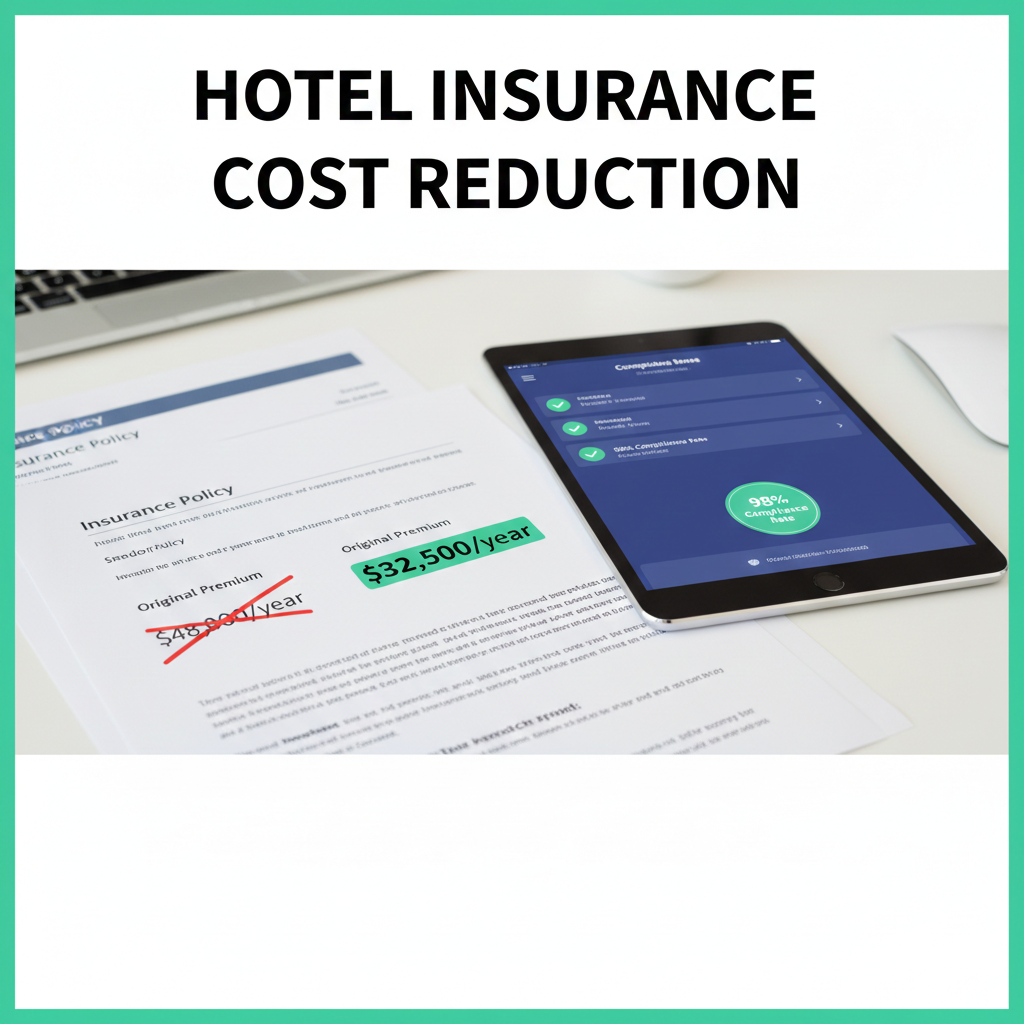
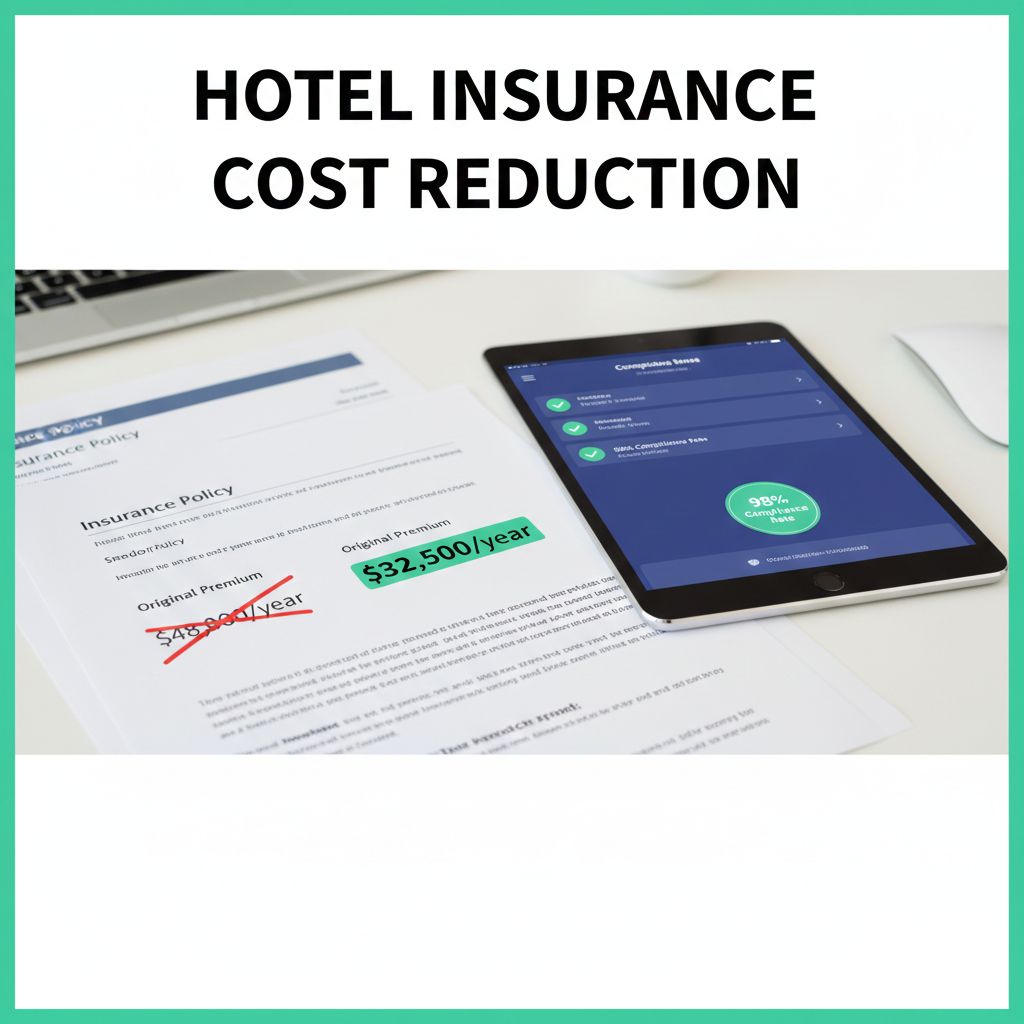
Insurance represents one of the largest fixed costs for hotel operations. Average property insurance alone costs $60-$100 per month for small operations (source: Insuranceopedia 2026), but comprehensive coverage for larger properties can reach $150,000-$500,000 annually when including general liability, workers’ compensation, and umbrella policies.
What most operators do not realize: insurance premiums are negotiable. Carriers assess risk based on historical claims, property characteristics, and—increasingly—documented risk management programs. Properties that demonstrate proactive safety and compliance through digital audit systems can qualify for meaningful premium reductions.
This article explains how digital audits affect insurance calculations, what documentation insurers value, and how to position your property for better rates.
Understanding Hotel Insurance Premium Factors
Before examining how audits affect premiums, understand what insurers evaluate:
Primary Premium Factors
| Factor | Weight | Description |
|---|---|---|
| Claims history | 30-40% | Your property’s past claims frequency and severity |
| Location | 15-25% | Geographic risks (weather, crime, regulations) |
| Property characteristics | 15-20% | Building age, construction type, square footage |
| Operations type | 10-15% | F&B operations, pool, spa, parking |
| Risk management programs | 10-20% | Documented safety measures and training |
The final factor—risk management programs—is the variable operators can most directly influence. And digital audit documentation is the most credible evidence of an effective program.
Pro Tip from the Floor: When your broker says “your premiums went up due to market conditions,” that is often partially true. But properties with strong risk documentation often see smaller increases—or even decreases—while competitors see larger hikes. The market affects everyone; your documentation determines whether you are above or below average.
Why Insurers Value Digital Documentation
Insurance underwriters assess risk by predicting future claims. Digital audit documentation helps them by:
1. Proving Systematic Risk Identification
Paper checklists show that inspections occurred. Digital systems prove:
- When inspections happened (timestamped records)
- Who conducted them (user authentication)
- What was found (structured data capture)
- How quickly issues were resolved (corrective action tracking)
This systematic approach indicates a property that catches problems before they become claims.
2. Demonstrating Training Verification
Digital systems can track:
- Staff completion of safety training modules
- Competency verification for high-risk tasks
- Recertification schedules and compliance
Properties with documented training programs have lower claims rates, which underwriters reward.
3. Creating Defensible Records
When claims occur, documentation affects outcomes:
Scenario 1: Guest slip-and-fall in lobby
- Without documentation: “We check the floors regularly”
- With digital documentation: “Floor inspection at 2:47 PM showed dry conditions. Guest incident reported at 3:15 PM. Subsequent inspection at 3:18 PM confirmed spill from guest coffee.”
Defensible records lead to:
- Faster claim resolution
- More favorable settlements
- Reduced litigation costs
4. Enabling Trend Analysis
Digital systems aggregate data across time periods, revealing:
- Recurring hazard locations
- Seasonal risk patterns
- Equipment failure precursors
Properties that address trends proactively file fewer claims than those that react to individual incidents.
Related reading: Hotel Incident Documentation: Legal Requirements and Best Practices
Premium Reduction Opportunities by Documentation Type
Different documentation types affect different coverage categories:
Safety Inspection Documentation
Affected Coverage: General liability, property
What Insurers Want:
- Regular inspection schedules (daily, weekly, monthly as appropriate)
- Photographic evidence of conditions
- Timestamped corrective actions
- Supervisor verification signatures
Potential Impact: 2-5% premium reduction on affected coverage
Example Documentation Requirements:
| Area | Inspection Frequency | Key Items |
|---|---|---|
| Public areas | Every 2-4 hours | Floor conditions, lighting, signage, obstacle clearance |
| Pool/spa | Every 2 hours when open | Chemical levels, depth markers, safety equipment, fencing |
| Parking | Daily | Lighting, surface conditions, security camera function |
| Elevators | Monthly | Certification currency, emergency communication, lighting |
Food Safety (HACCP) Documentation
Affected Coverage: General liability, product liability
HACCP (Hazard Analysis Critical Control Points) documentation demonstrates:
- Temperature monitoring of refrigeration equipment
- Cooking temperature verification
- Allergen management procedures
- Cleaning and sanitization logs
Potential Impact: 1-3% premium reduction on affected coverage
Critical Documentation:
- Temperature logs with automatic alerts for out-of-range readings
- Corrective action records when temperatures exceed safe limits (above 4°C / 40°F for refrigeration, below 60°C / 140°F for hot holding)
- Staff training records on food safety procedures
Pro Tip from the Floor: Some insurers specifically ask about “HACCP documentation” during renewal. If you cannot provide it, they assume the worst. If you provide complete digital records, you differentiate from competitors who cannot.
Related reading: HACCP for Hotels: Understanding Critical Control Points
Fire Safety Documentation
Affected Coverage: Property, business interruption
What Insurers Want:
- Monthly fire extinguisher inspections (documented with photos)
- Annual fire suppression system testing
- Fire door operation verification
- Evacuation drill records
- Emergency lighting tests
Potential Impact: 2-4% on property coverage
Documentation Schedule:
| Item | Frequency | Documentation Requirement |
|---|---|---|
| Fire extinguishers | Monthly | Visual inspection, tag initials, photo of pressure gauge |
| Smoke detectors | Monthly | Function test, battery check |
| Sprinkler system | Quarterly | Professional inspection report |
| Evacuation drills | Semi-annually | Participant list, time to clear, issues identified |
| Emergency lighting | Monthly | Function test under simulated power failure |
Related reading: Hotel Fire Safety Audit Checklist: A Complete Guide
Employee Safety Documentation
Affected Coverage: Workers’ compensation
Workers’ comp premiums depend heavily on:
- Historical injury rates
- Safety training programs
- Hazard identification processes
- Return-to-work programs
Documentation That Reduces Premiums:
| Program | Documentation Type | Expected Impact |
|---|---|---|
| Safety training | Completion records, competency tests | 5-10% experience modification reduction |
| Equipment maintenance | Preventive maintenance logs | 3-5% reduction |
| Incident investigation | Root cause analysis records | 2-4% reduction |
| Near-miss reporting | Trend analysis, corrective actions | 3-6% reduction |
Pro Tip from the Floor: The “experience modification” (mod rate) directly multiplies your workers’ comp premium. A mod of 0.85 means 15% savings; a mod of 1.15 means 15% penalty. Documented safety programs are the primary driver of mod improvements.
Case Examples: Documentation Impact on Premiums
Case 1: Mid-Size Full-Service Hotel (180 rooms)
Before Digital Audits:
- General liability premium: $45,000
- Workers’ compensation: $62,000
- Property coverage: $38,000
- Total relevant coverage: $145,000
After 2 Years of Digital Documentation:
- General liability: $41,000 (9% reduction)
- Workers’ compensation: $55,000 (11% reduction via mod improvement)
- Property coverage: $37,000 (3% reduction)
- New total: $133,000
Annual Savings: $12,000
Key documentation improvements:
- Moved from paper checklists to timestamped digital inspections
- Implemented photo documentation for all safety issues
- Created automated alert system for overdue corrective actions
- Established trend reporting reviewed monthly by management
Case 2: Restaurant-Heavy Resort Property
Situation: Property with three restaurants and extensive pool complex facing 15% renewal increase.
Intervention:
- Implemented comprehensive HACCP digital logging
- Created pool safety documentation with hourly chemical readings
- Established incident photography protocol with GPS (Global Positioning System) tagging
Outcome:
- Renewal increase reduced from 15% to 4%
- Broker noted documentation as “differentiating factor in hard market”
- Following year: 2% reduction vs. market average 8% increase
Avoided Cost: Approximately $18,000 annually compared to market-rate increase
Case 3: Limited-Service Portfolio (12 properties)
Challenge: High mod rate (1.22) due to housekeeping injuries
Documentation Program:
- Standardized room inspection checklist across portfolio
- Ergonomic hazard identification as inspection item
- Equipment maintenance logging for cleaning equipment
- Training verification for proper lifting techniques
Results Over 3 Years:
- Year 1: Mod rate 1.22 → 1.15
- Year 2: Mod rate 1.15 → 1.05
- Year 3: Mod rate 1.05 → 0.92
Premium Impact: Workers’ comp reduced from $312,000 to $235,000 annually
Total 3-Year Savings: $231,000
Working with Your Insurance Broker
Your broker is your advocate with carriers. Help them help you:
Before Renewal (90-120 Days Out)
Prepare a “risk management summary” including:
-
Audit Program Overview
- Inspection types and frequencies
- Digital system capabilities
- Sample reports showing data quality
-
Compliance Metrics
- Overall compliance scores (trending upward)
- Issue resolution time (average days to close)
- Repeat issue reduction percentage
-
Training Documentation
- Courses completed by staff category
- Recertification compliance rates
- Competency verification methods
-
Incident Response
- Average time from incident to documentation
- Root cause analysis completion rate
- Corrective action implementation timeline
Questions to Ask Your Broker
- “Which carriers specifically offer discounts for documented safety programs?”
- “What documentation format do underwriters prefer seeing?”
- “Can we schedule a call with the underwriter to present our program?”
- “What would move our property from standard to preferred tier?”
Pro Tip from the Floor: Brokers often work with the same underwriters across multiple clients. A broker who sees your thorough documentation will remember it when discussing your account. Make it easy for them to advocate for you by providing organized, professional materials.
Documentation Standards Insurers Expect
Different industries have documentation standards. Align your audit program with what insurers recognize:
ISO 45001 (Occupational Health and Safety)
While full certification is not required, adopting ISO 45001 principles shows:
- Hazard identification processes
- Risk assessment methodologies
- Worker participation in safety
- Performance evaluation and improvement
OSHA Compliance Documentation
In the United States, OSHA (Occupational Safety and Health Administration) requirements represent minimum standards. Exceeding these requirements demonstrates proactive risk management:
| OSHA Requirement | Enhanced Standard |
|---|---|
| Log injuries (300 series forms) | Track near-misses and trending |
| Post emergency procedures | Conduct and document drills |
| Train on hazardous materials | Verify comprehension via testing |
| Maintain walking surfaces | Document inspections multiple times daily |
Industry-Specific Certifications
Some hospitality certifications carry weight with insurers:
| Certification | Relevance |
|---|---|
| AHLEI (American Hotel & Lodging Educational Institute) | Training quality verification |
| ServSafe | Food safety competency |
| CPO (Certified Pool Operator) | Pool safety expertise |
| OSHA 10/30 Hour | General safety knowledge |
Technology Features That Support Premium Reduction
When selecting or evaluating audit software for insurance purposes, prioritize:
Immutable Timestamps
Records cannot be backdated or modified after the fact. This establishes authenticity.
Photo and Video Documentation
Visual evidence substantiates inspection findings and issue resolution.
Automated Corrective Action Tracking
System enforces resolution timelines and escalates overdue items.
User Authentication
Each entry is tied to a specific authorized user, establishing chain of custody.
Secure Data Retention
Records are retained per legal requirements (typically 5-7 years) and protected from alteration.
Export Capabilities
Data can be provided to insurers in standard formats (PDF reports, Excel data).
Trend Reporting
System identifies patterns that enable proactive intervention.
Related reading: Why Offline-First Matters for Hotel Audit Apps
Building Your Insurance Documentation Program
Follow this implementation approach:
Phase 1: Assessment (30 Days)
- Review current insurance policies and identify premium drivers
- Analyze claims history for recurring issues
- Meet with broker to understand underwriter priorities
- Audit current documentation practices and gaps
Phase 2: Implementation (60 Days)
- Select or enhance digital audit system
- Create inspection schedules aligned with insurer expectations
- Develop documentation standards (photo requirements, narrative detail)
- Train staff on documentation importance
Phase 3: Demonstration (90 Days)
- Compile 90-day documentation package
- Create trend analysis showing improvement trajectory
- Prepare risk management summary for broker
- Schedule pre-renewal underwriter presentation
Phase 4: Ongoing Optimization
- Monthly review of documentation completeness
- Quarterly analysis of corrective action velocity
- Annual comprehensive program review
- Continuous training and reinforcement
Calculating Your Potential Savings
Estimate your property’s opportunity:
Step 1: Identify Current Premiums
| Coverage Type | Annual Premium |
|---|---|
| General liability | $ ________ |
| Property | $ ________ |
| Workers’ compensation | $ ________ |
| Other relevant coverage | $ ________ |
| Total | $ ________ |
Step 2: Apply Conservative Reduction Estimates
| Coverage | Current Premium | Conservative Reduction | Potential Savings |
|---|---|---|---|
| General liability | $ ________ | 3% | $ ________ |
| Property | $ ________ | 2% | $ ________ |
| Workers’ comp | $ ________ | 5% | $ ________ |
| Total Potential | $ ________ |
Step 3: Compare to Documentation Program Cost
If digital audit software costs $3,000-$5,000 annually and enables $8,000-$15,000 in premium savings, ROI exceeds 200%.
Beyond Premium Reduction: Claims Outcomes
Even if premiums remain flat, documentation improves claims experiences:
Faster Resolution
Claims with clear documentation resolve 40-60% faster than those requiring investigation.
Lower Payouts
Defensible documentation reduces average claim payout by demonstrating reasonable care.
Reduced Litigation
Strong documentation discourages frivolous claims and reduces attorney involvement.
Better Carrier Relationships
Insurers prefer clients who make their jobs easier. Documentation builds goodwill.
Pro Tip from the Floor: The claims adjuster assigned to your property will handle hundreds of claims per year. The properties that provide organized, timestamped documentation get faster, more favorable attention. The properties that respond with “we need to dig through files” get added to the pile.
Making the Case to Ownership
Asset managers presenting documentation programs to ownership should emphasize:
Financial Returns
- Premium savings (quantified as shown above)
- Claims cost reduction
- Avoided increases during hard markets
Risk Mitigation
- Reduced franchise termination risk
- Improved defensibility in litigation
- Regulatory compliance verification
Operational Benefits
- Better visibility into property conditions
- Faster issue resolution
- Staff accountability improvement
Competitive Advantage
- Properties with strong risk profiles attract better financing terms
- Documentation supports higher valuations during sale
- Demonstrated management quality improves brand relationships
Related reading: Calculating the ROI of Hotel Operations Software
Ready to Reduce Your Insurance Costs?
Digital audit documentation is not just about operational efficiency—it is a financial strategy that affects your property’s bottom line through reduced premiums, better claims outcomes, and improved risk management.
HAS provides the documentation infrastructure that insurers respect:
- Timestamped, immutable inspection records
- Photo and video documentation with GPS verification
- Automated corrective action tracking
- Comprehensive trend analysis and reporting
- Secure retention meeting legal requirements
Properties using HAS report average insurance savings of 8-12% within two renewal cycles.
See how HAS can transform your risk documentation from a compliance burden into a competitive financial advantage. Your broker—and your ownership—will notice the difference.

About the Author
Orvia Team
Hotel Audit Experts
The Orvia team brings decades of combined experience in hospitality operations, quality assurance, and technology. We're passionate about helping hotels maintain exceptional standards.